
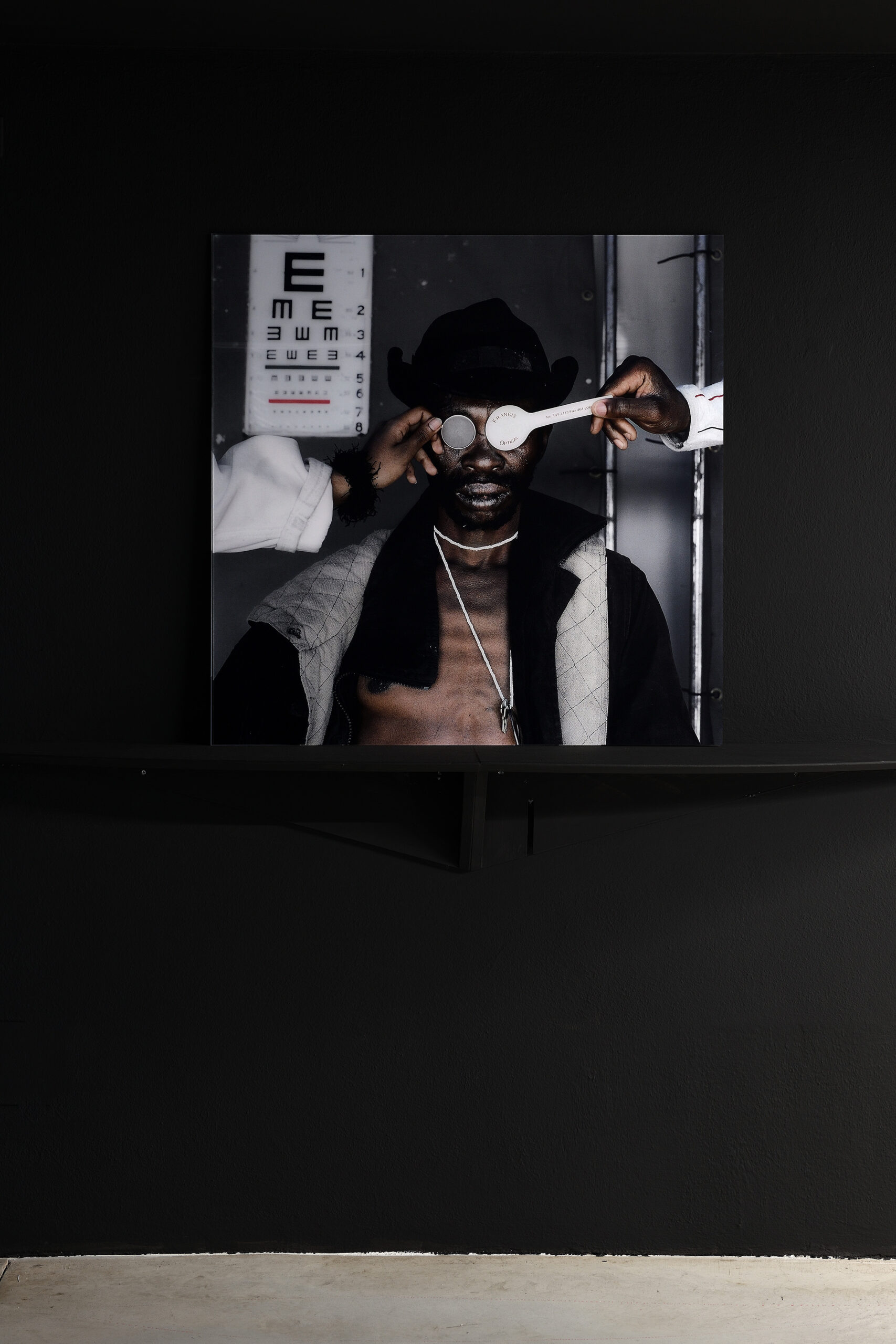
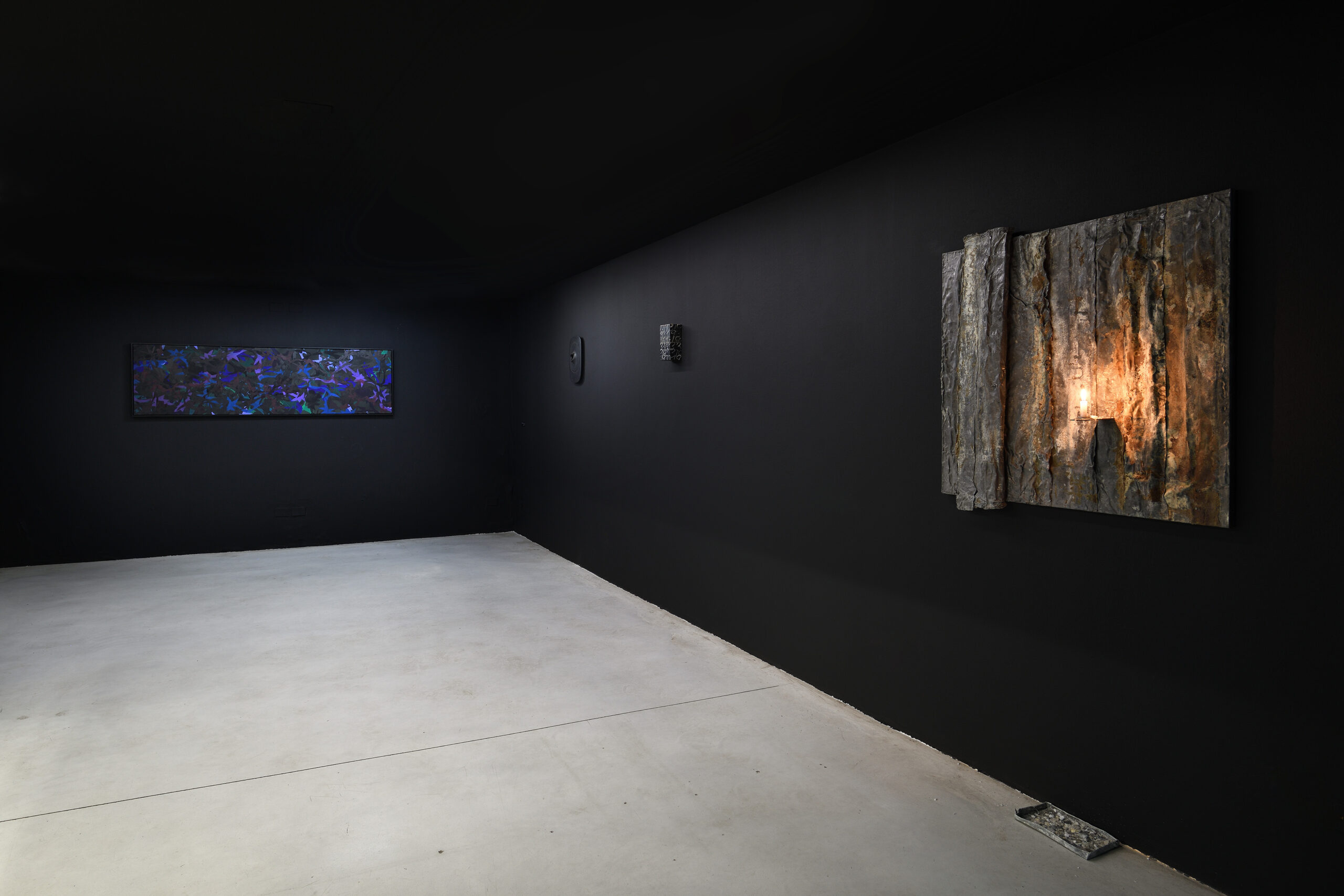
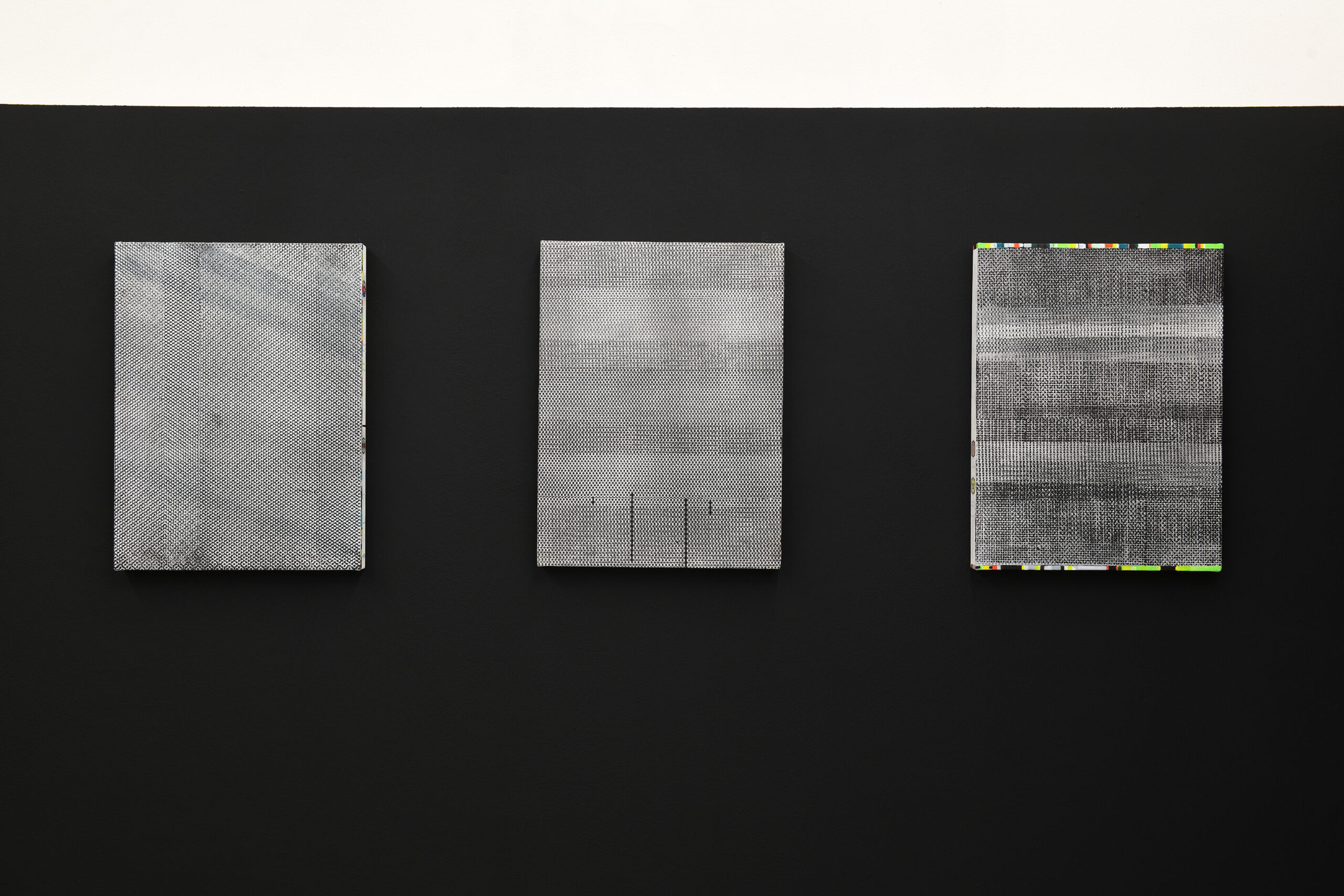
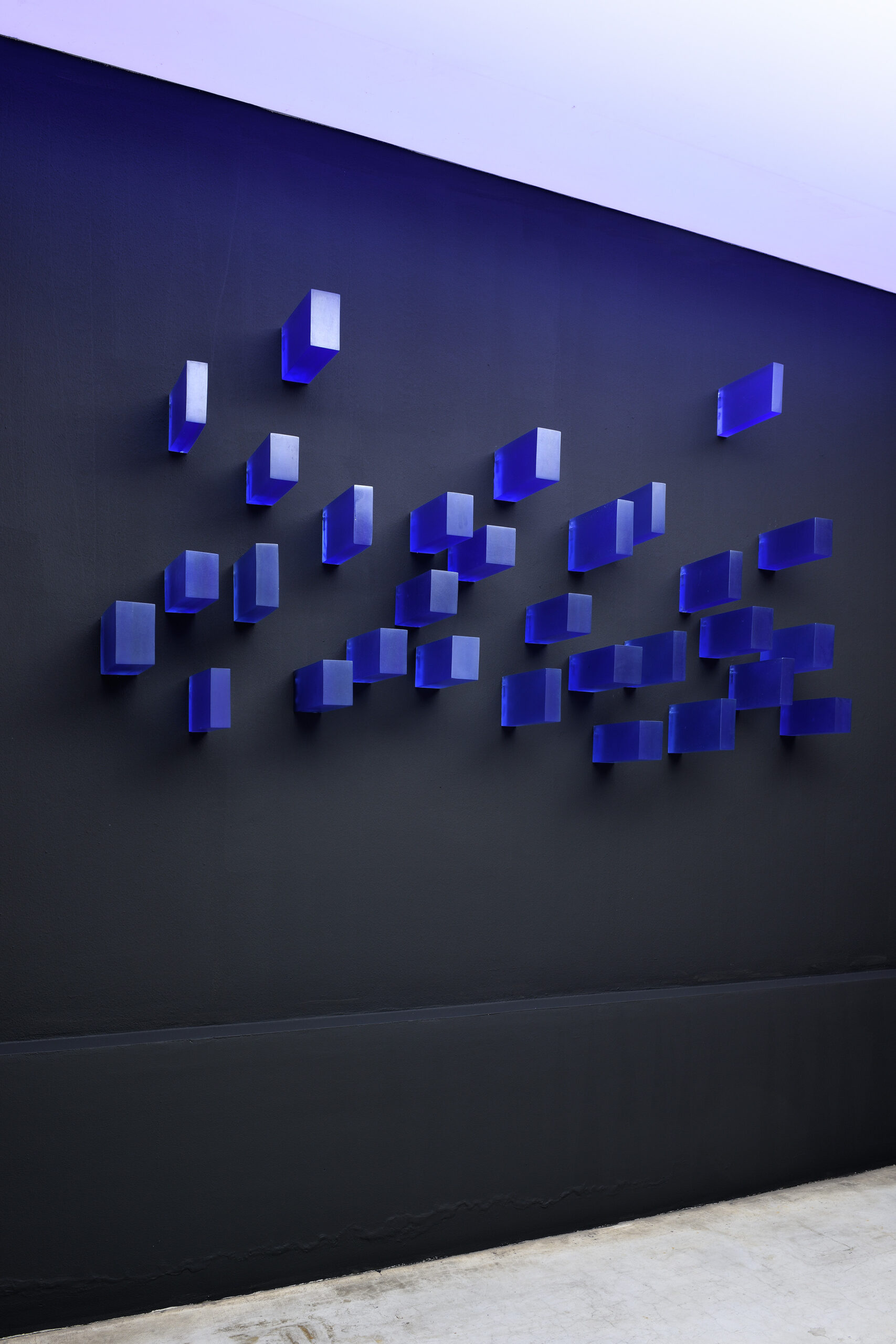
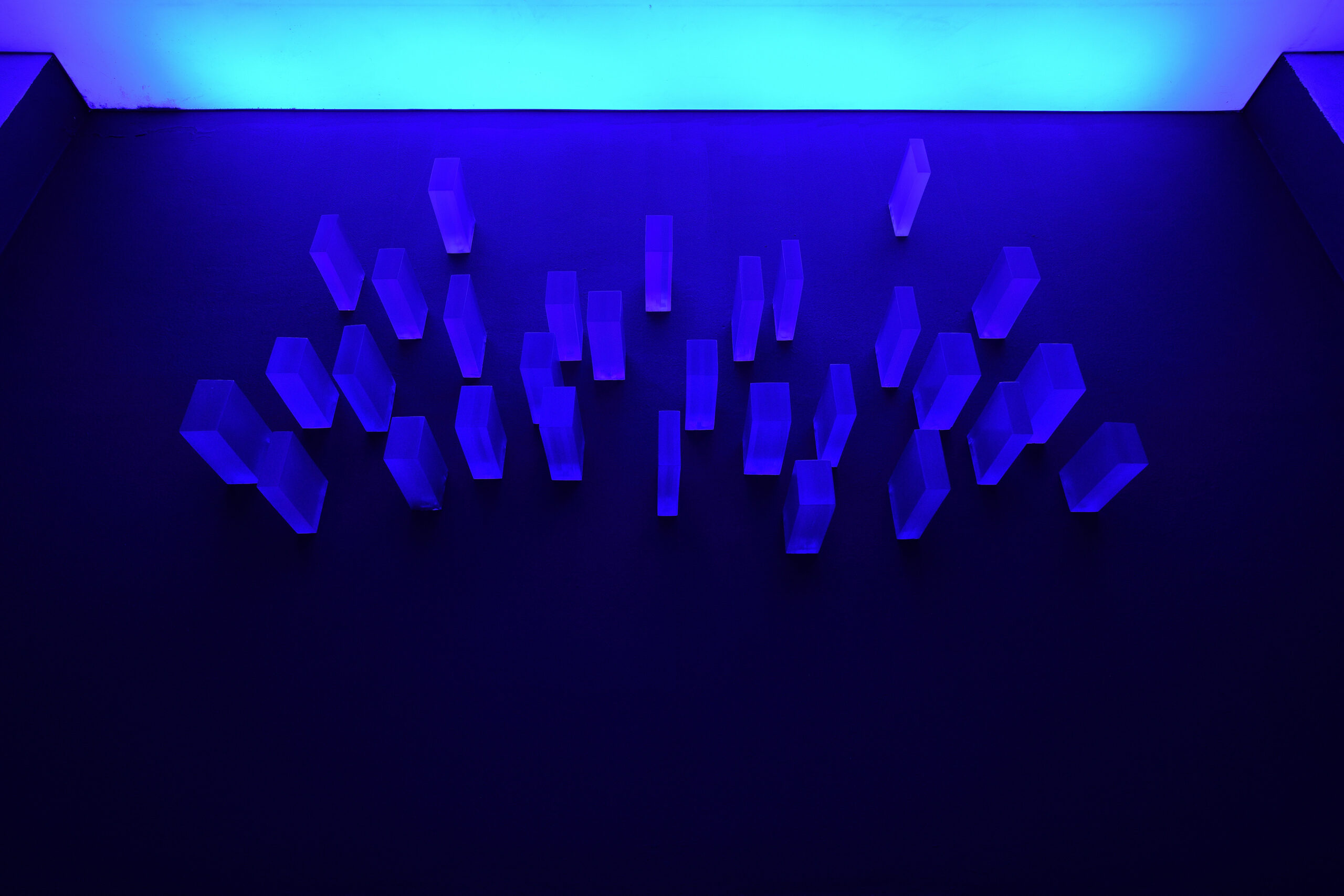

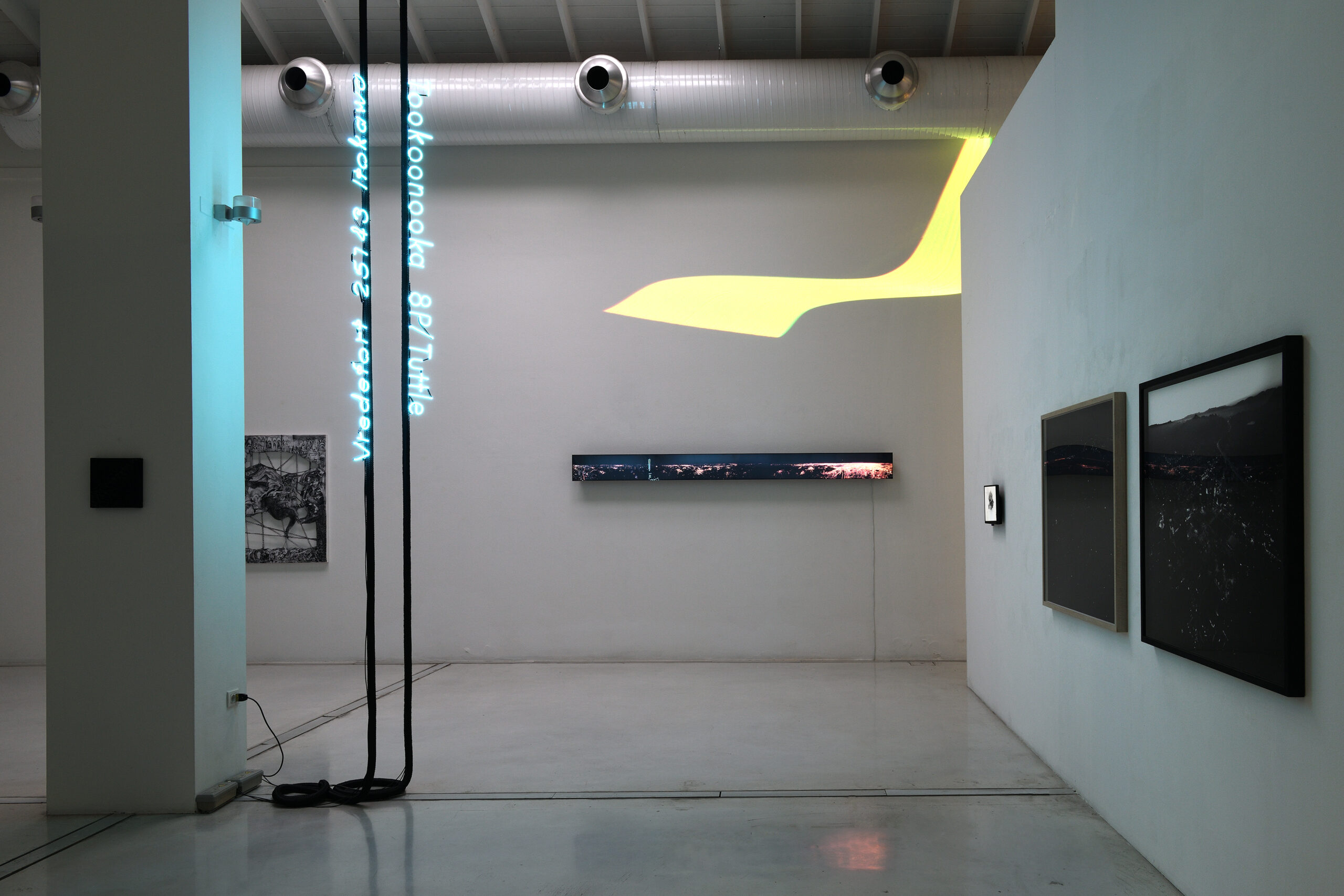
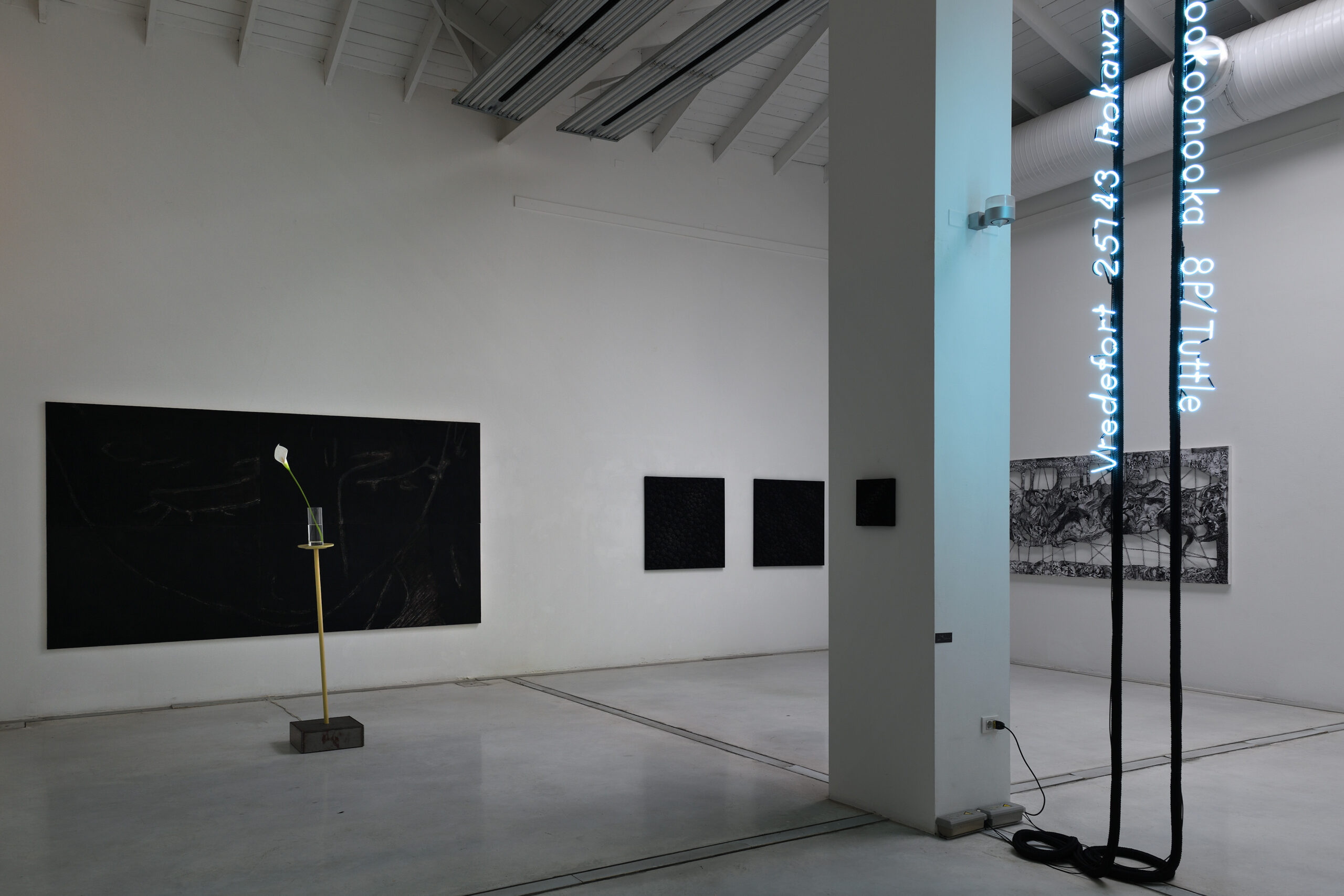
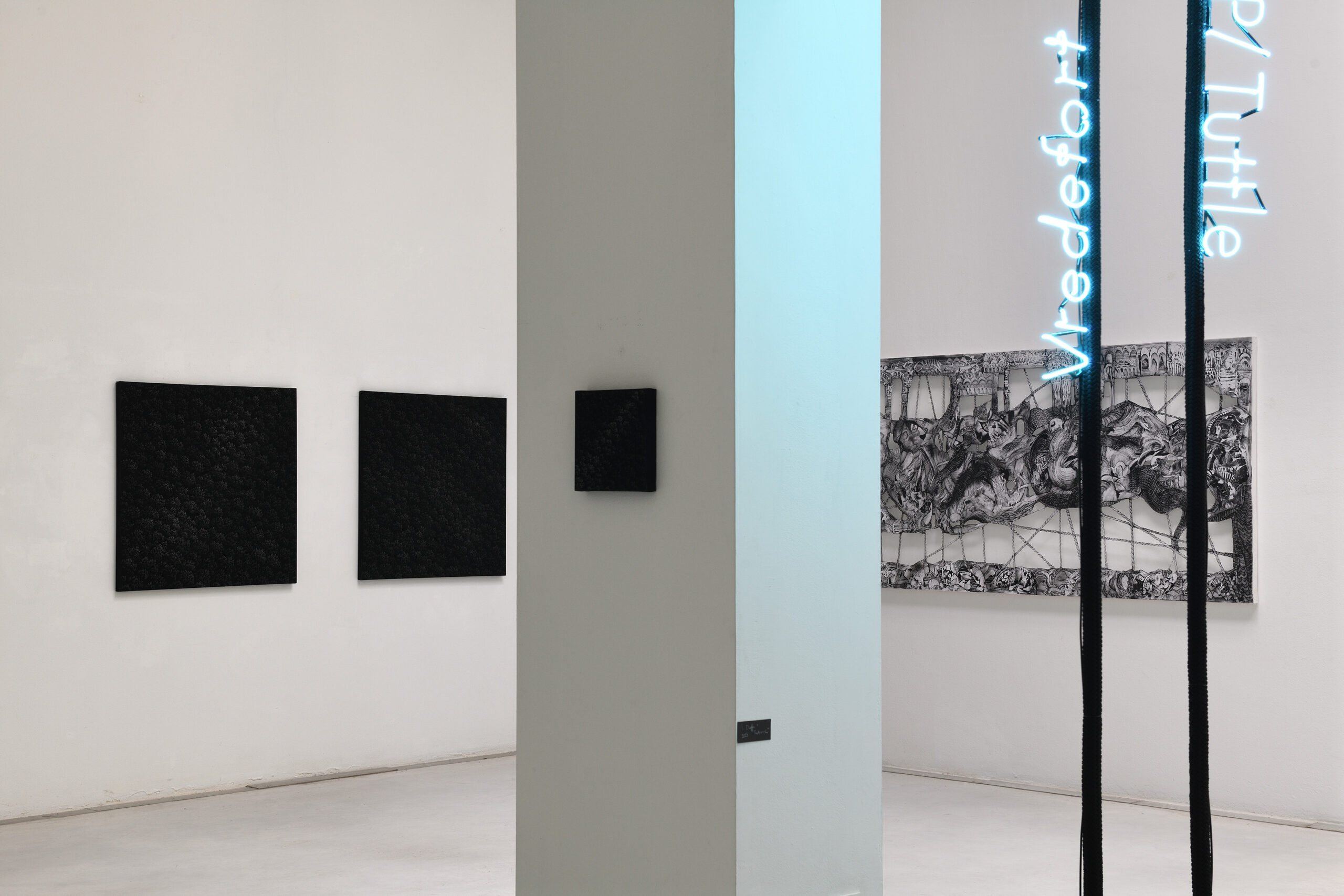
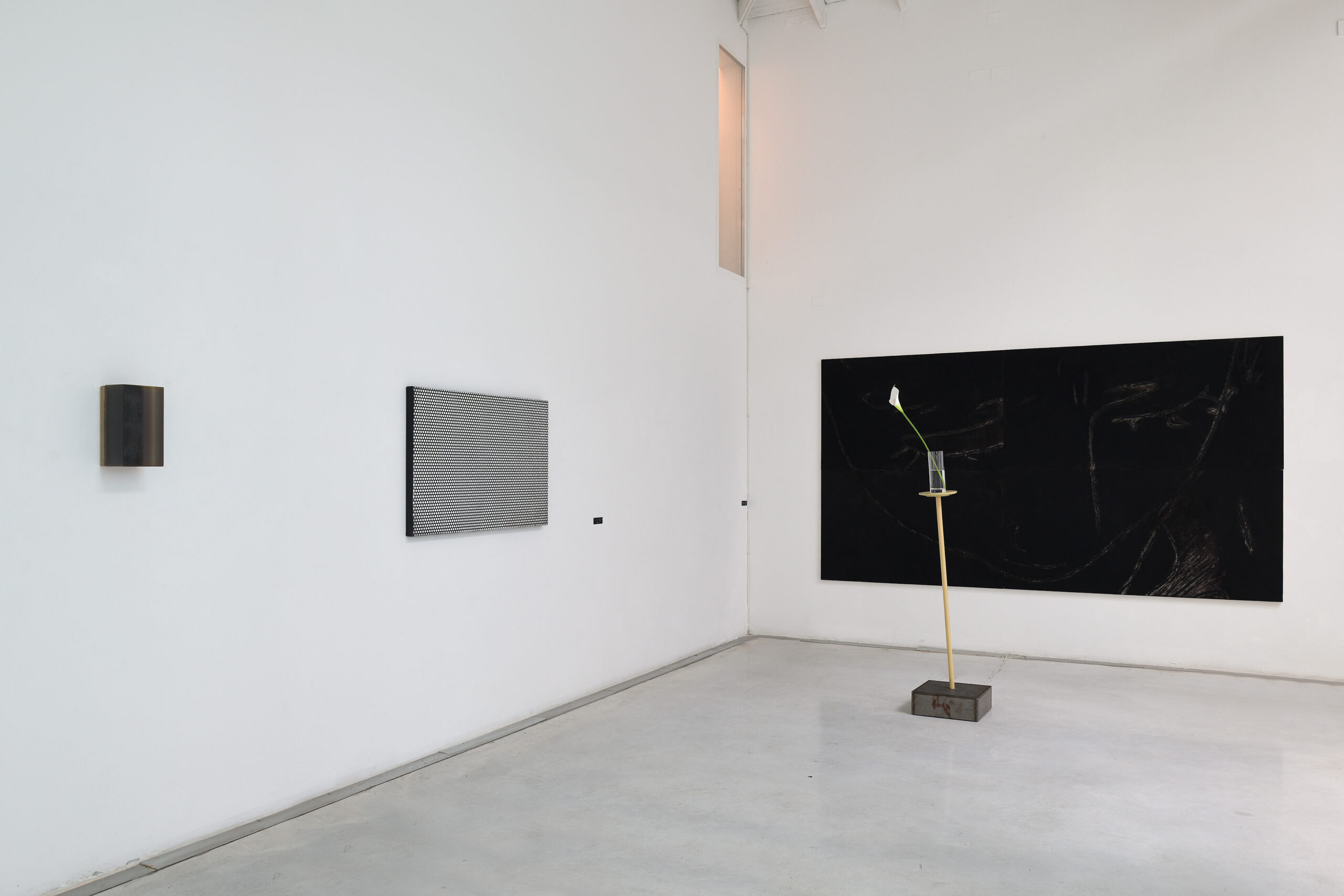
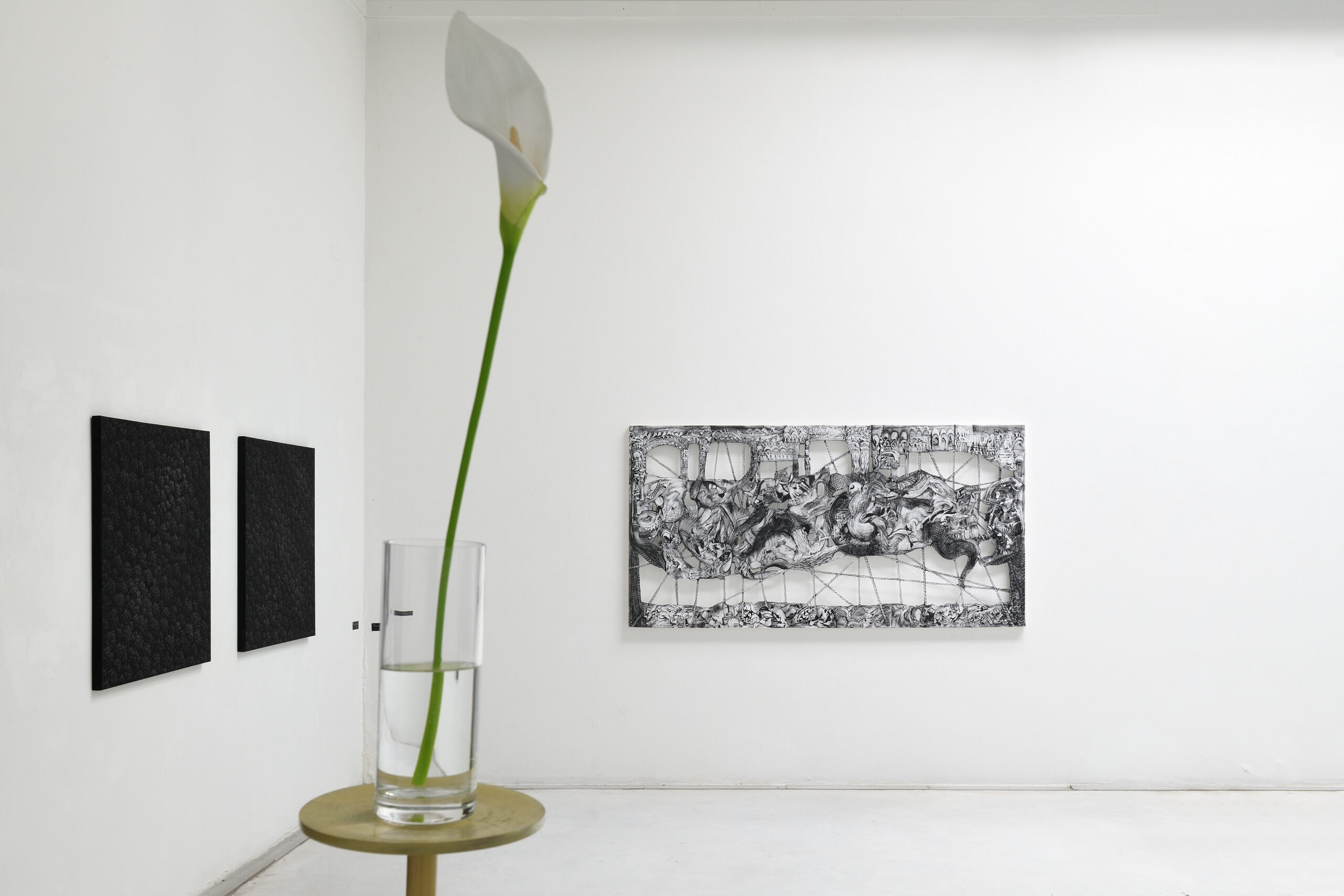
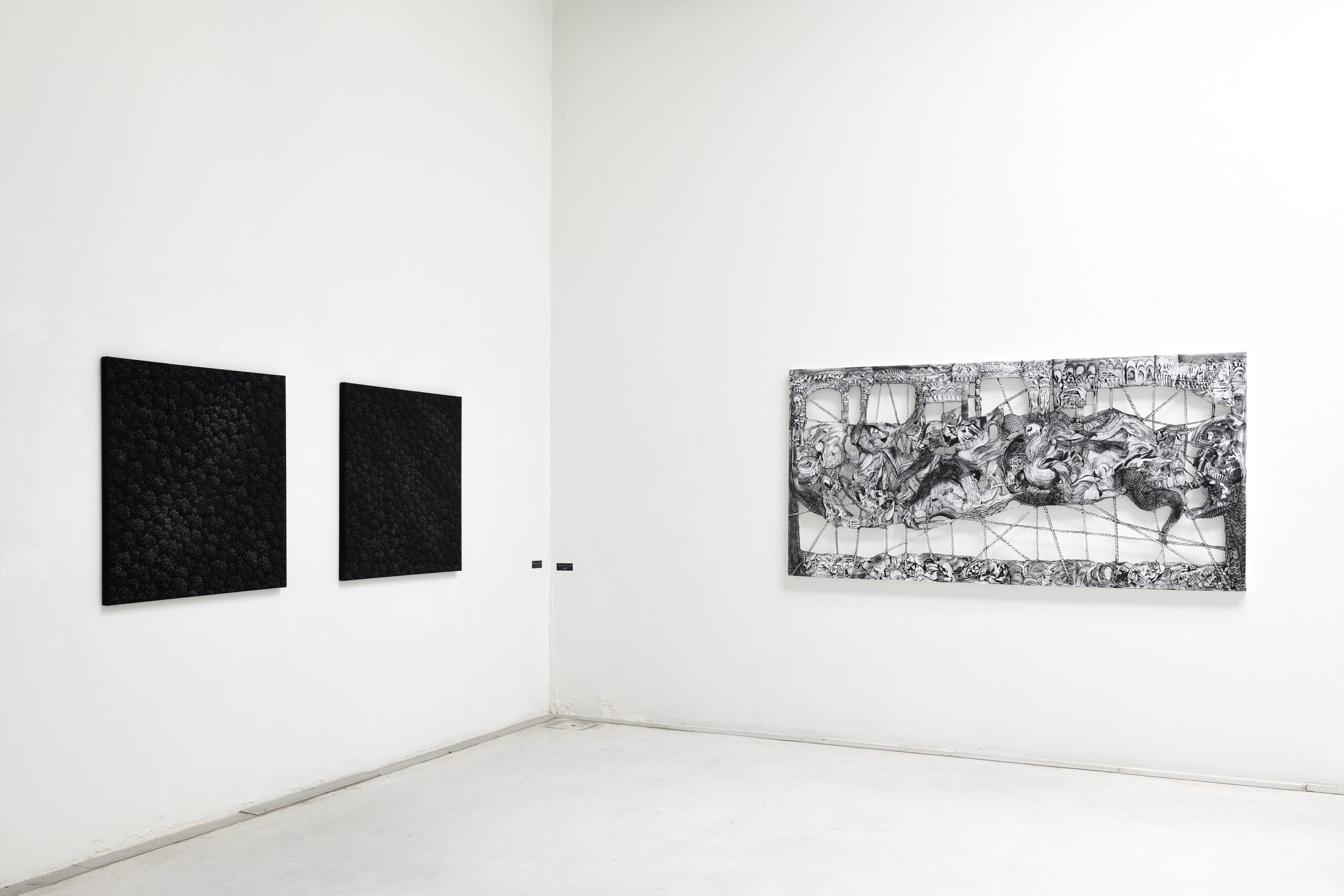
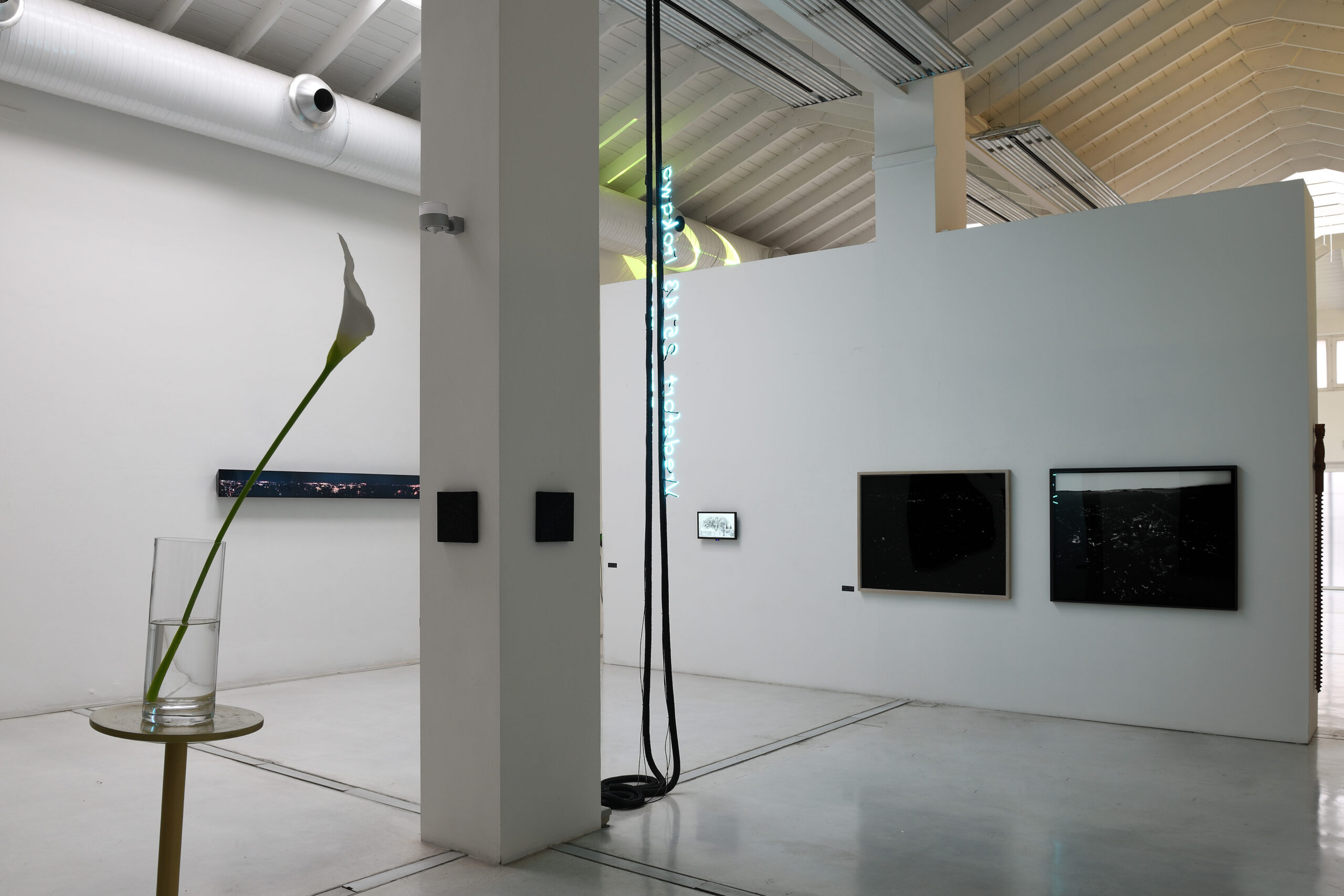
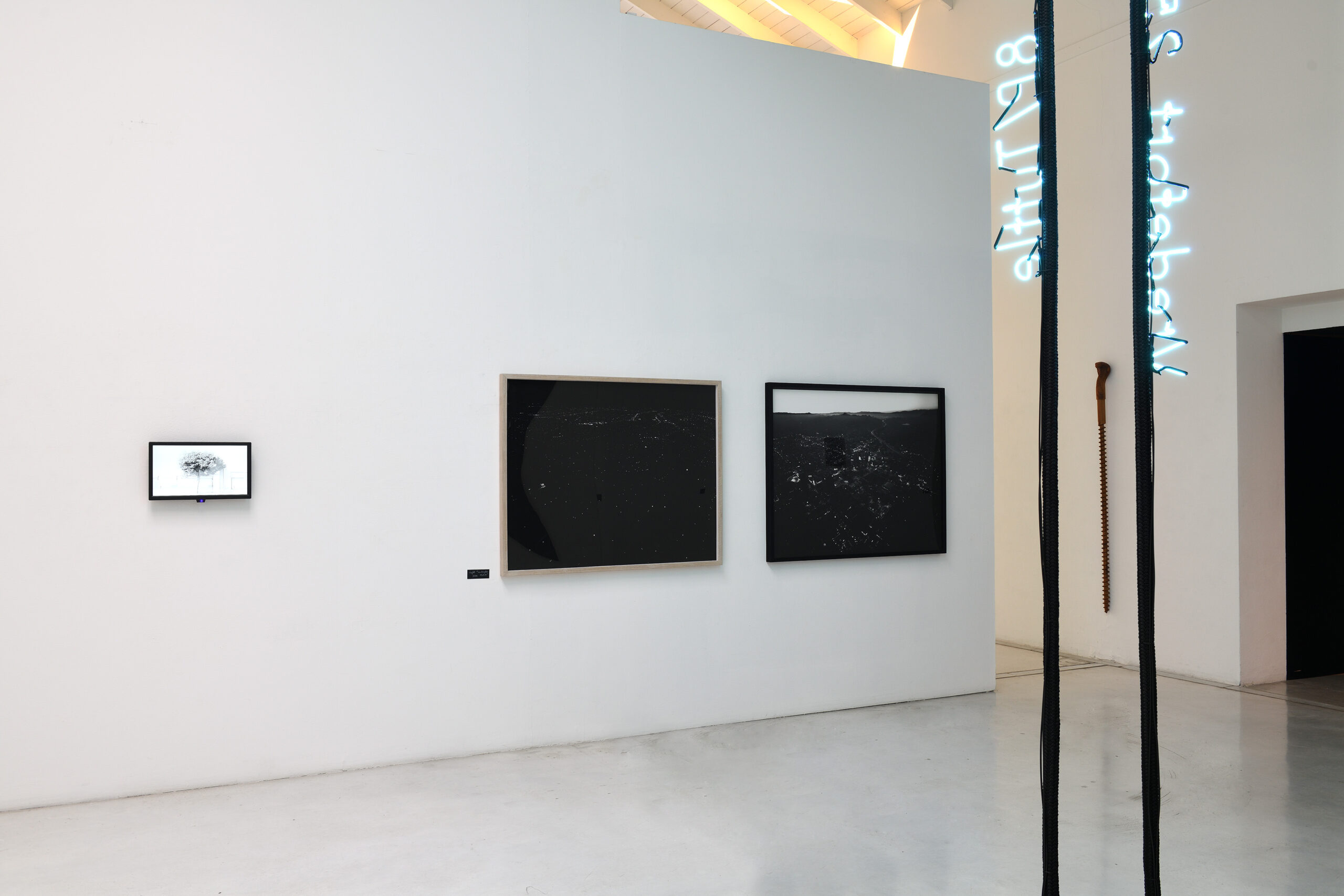
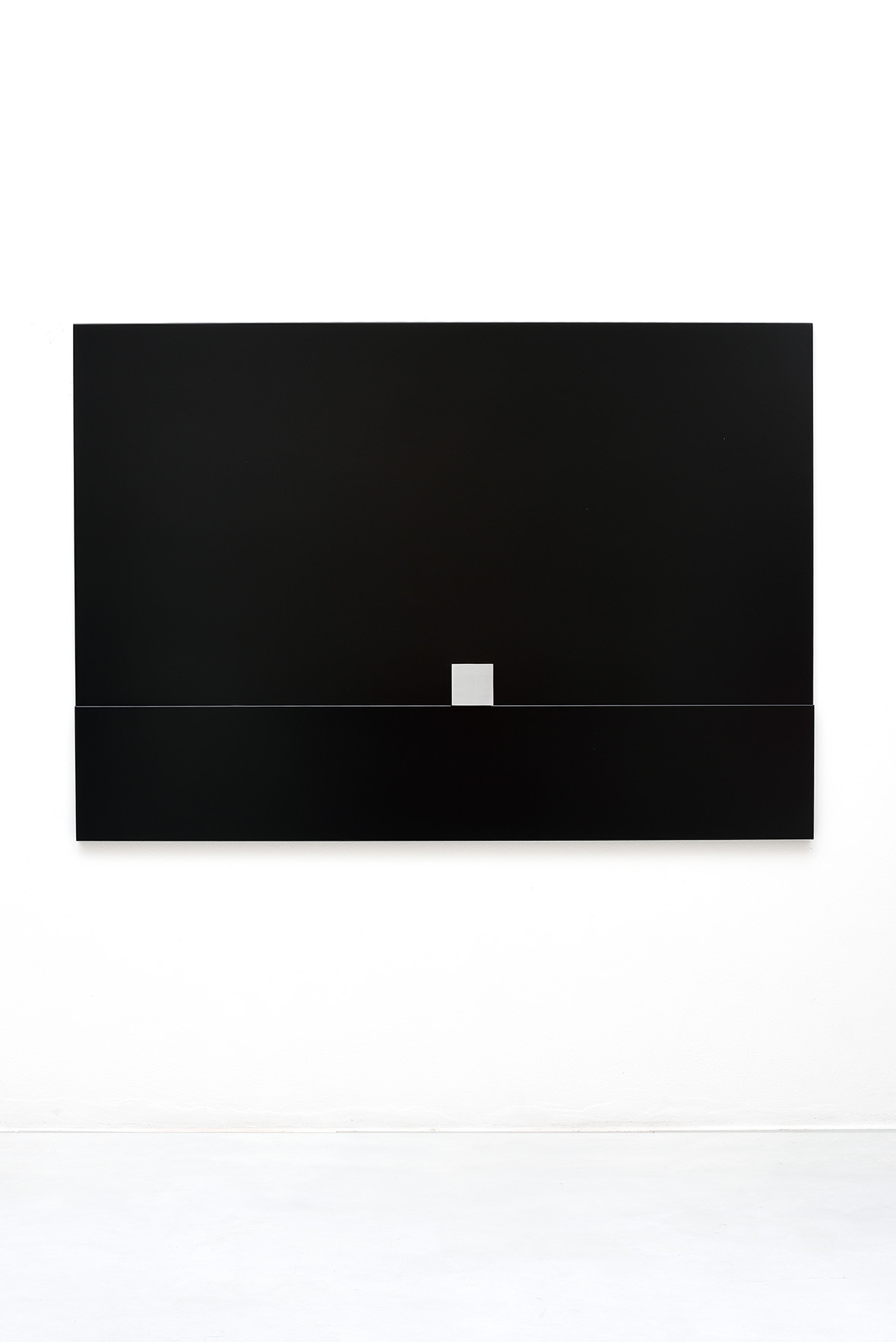
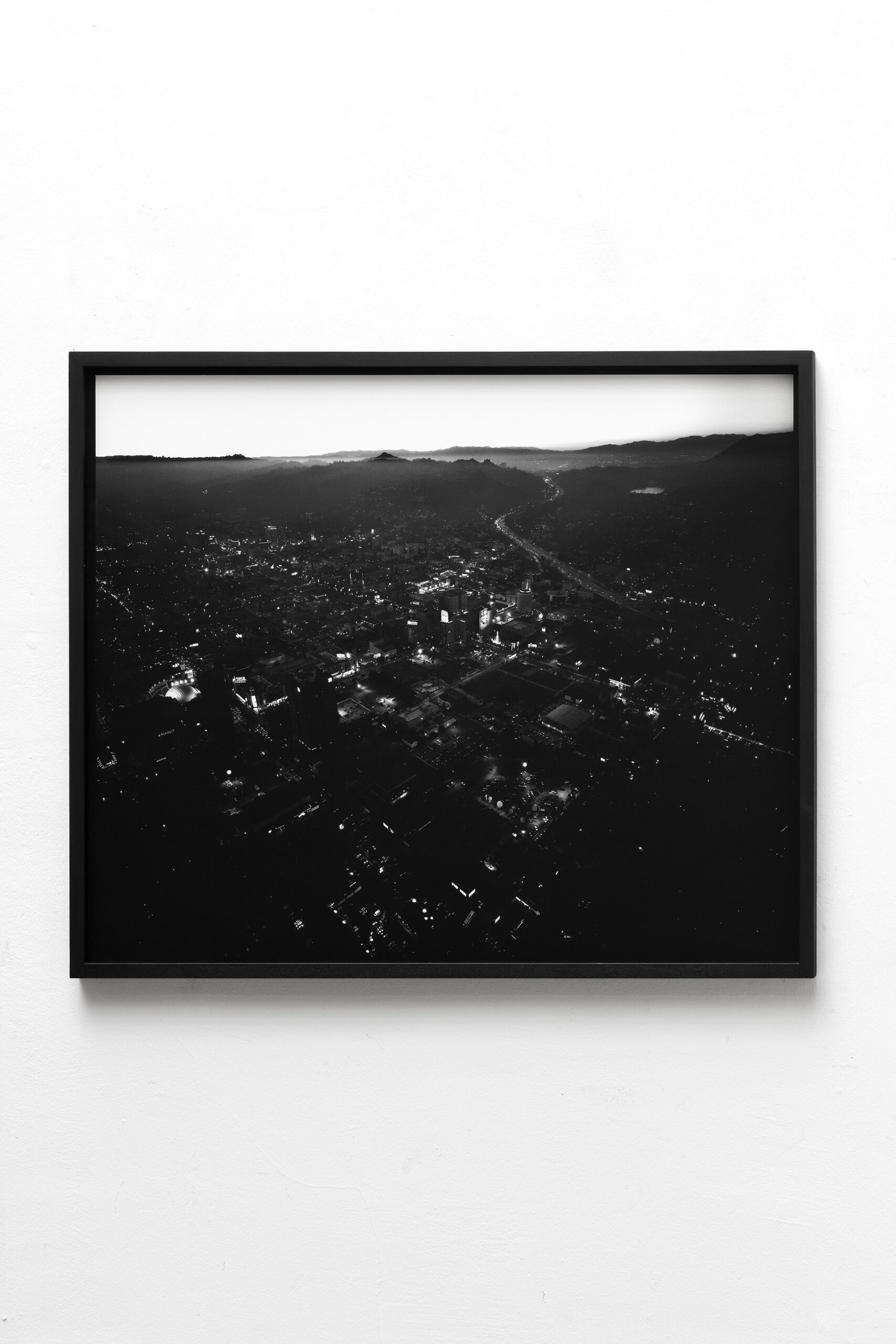
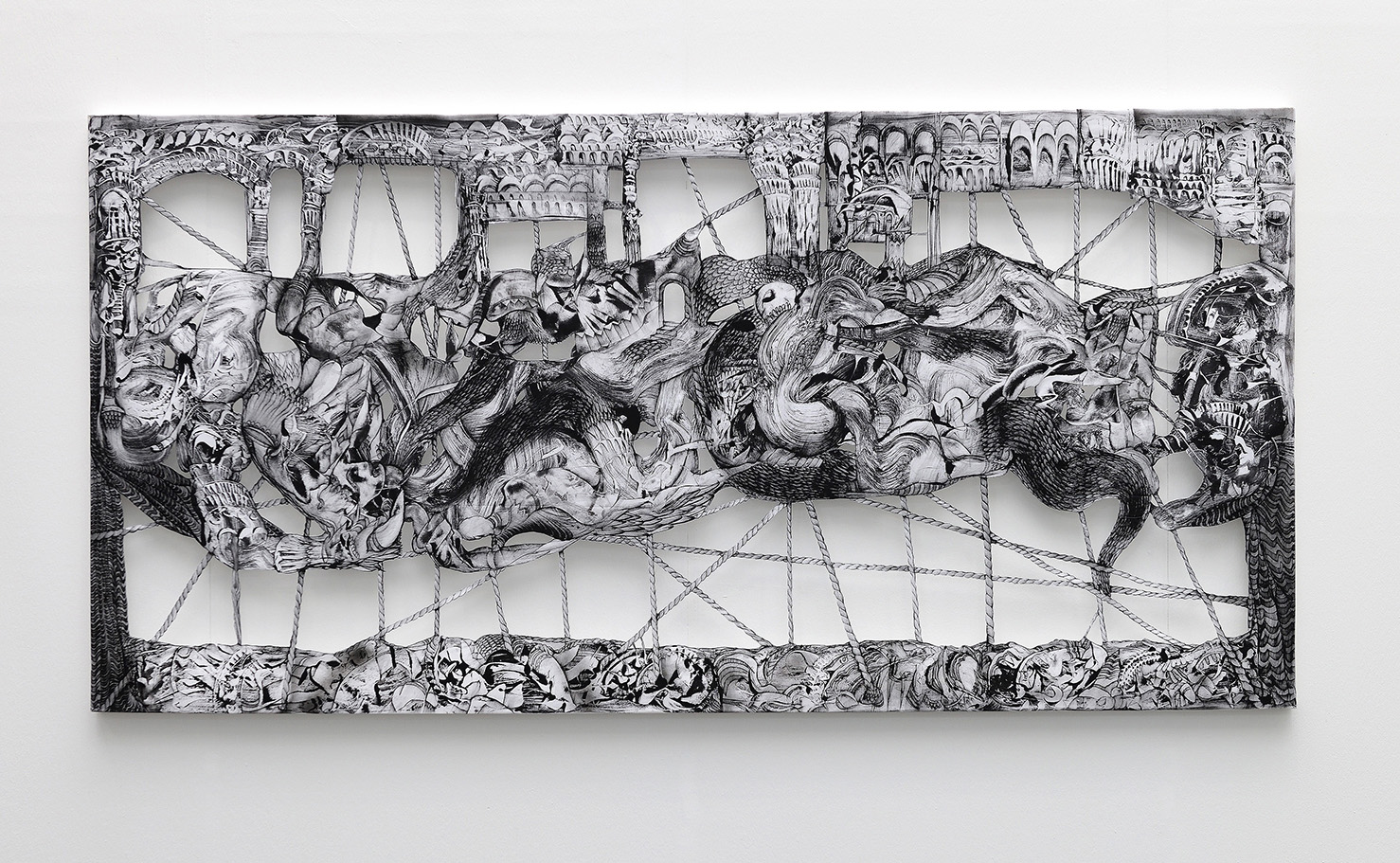
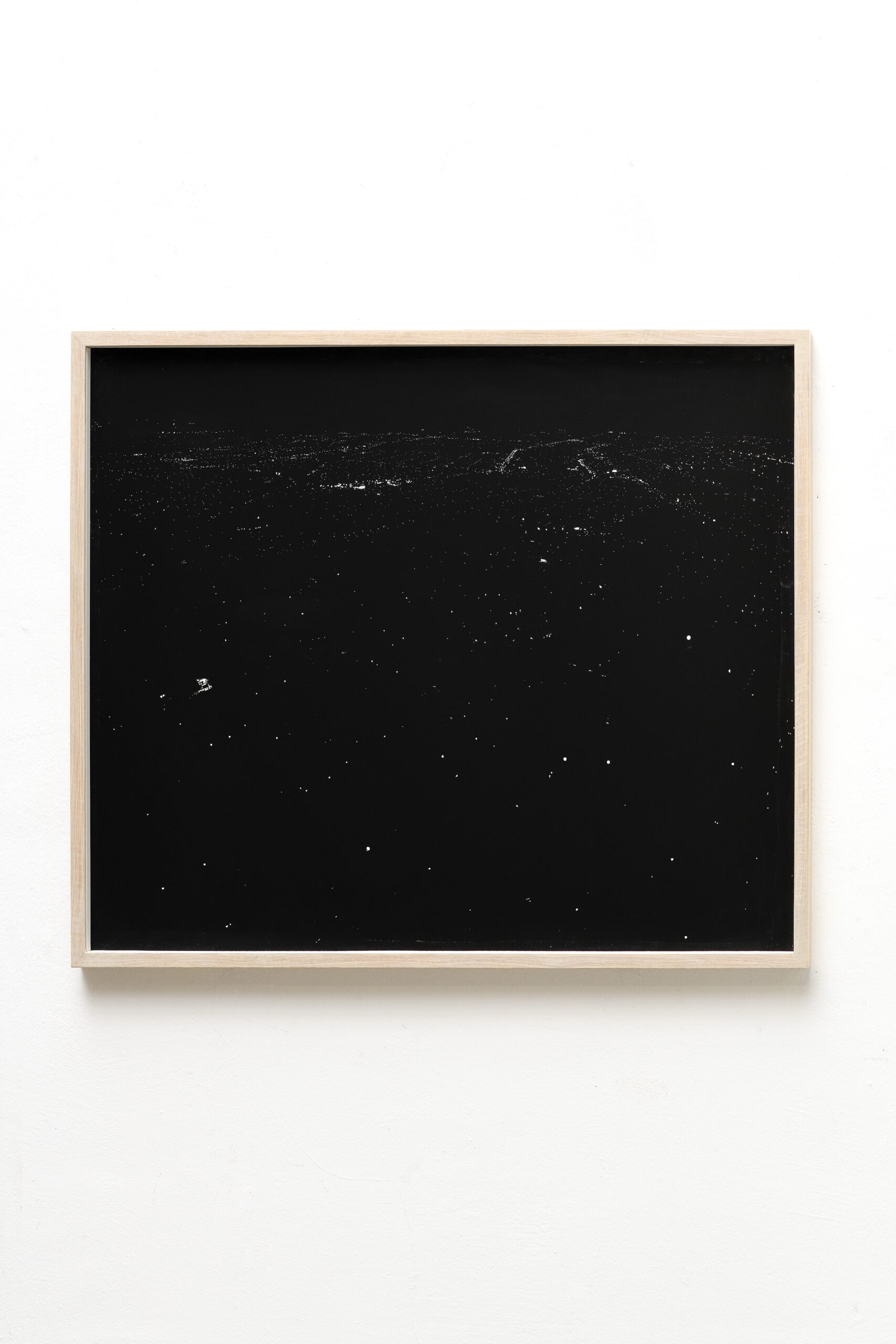
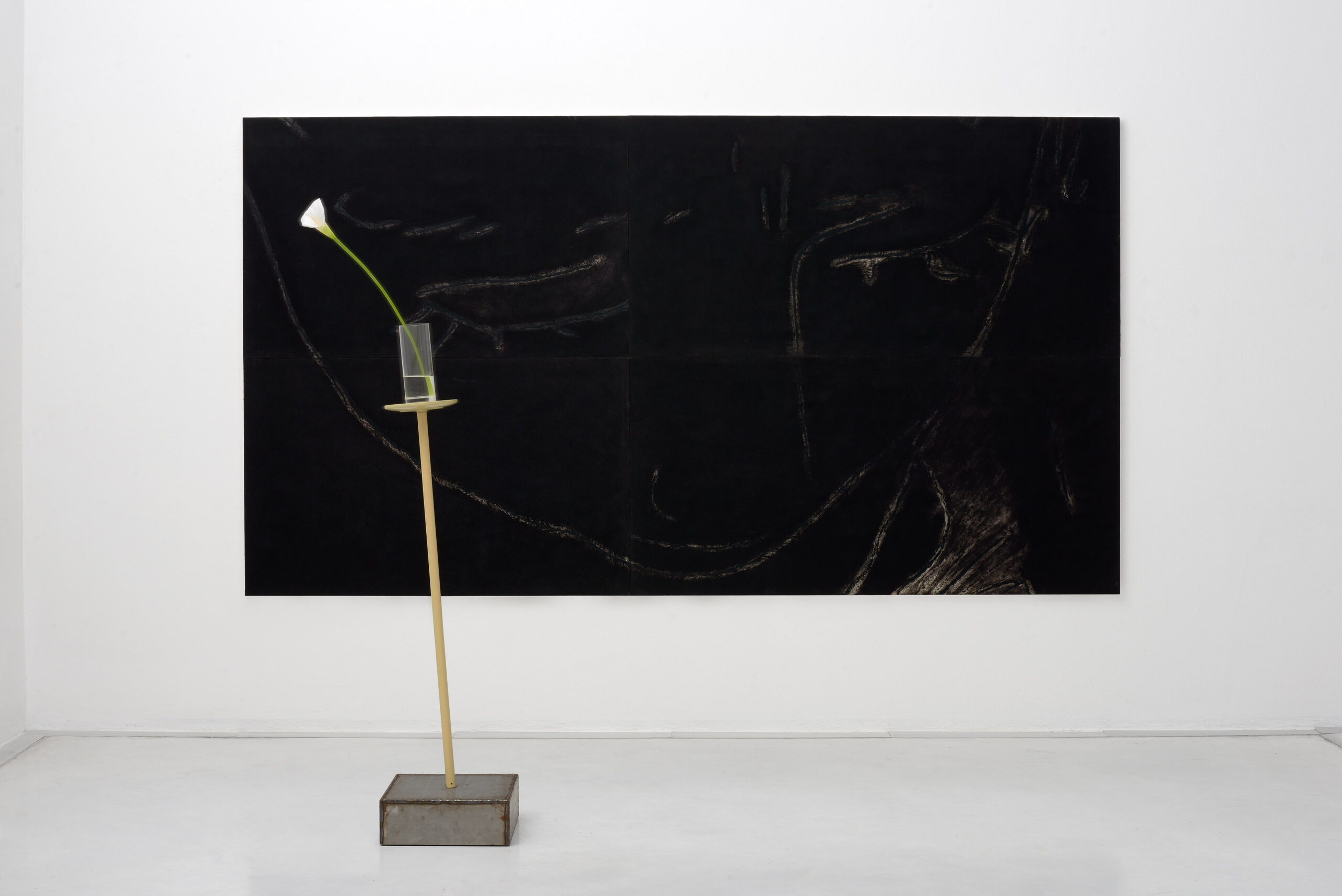
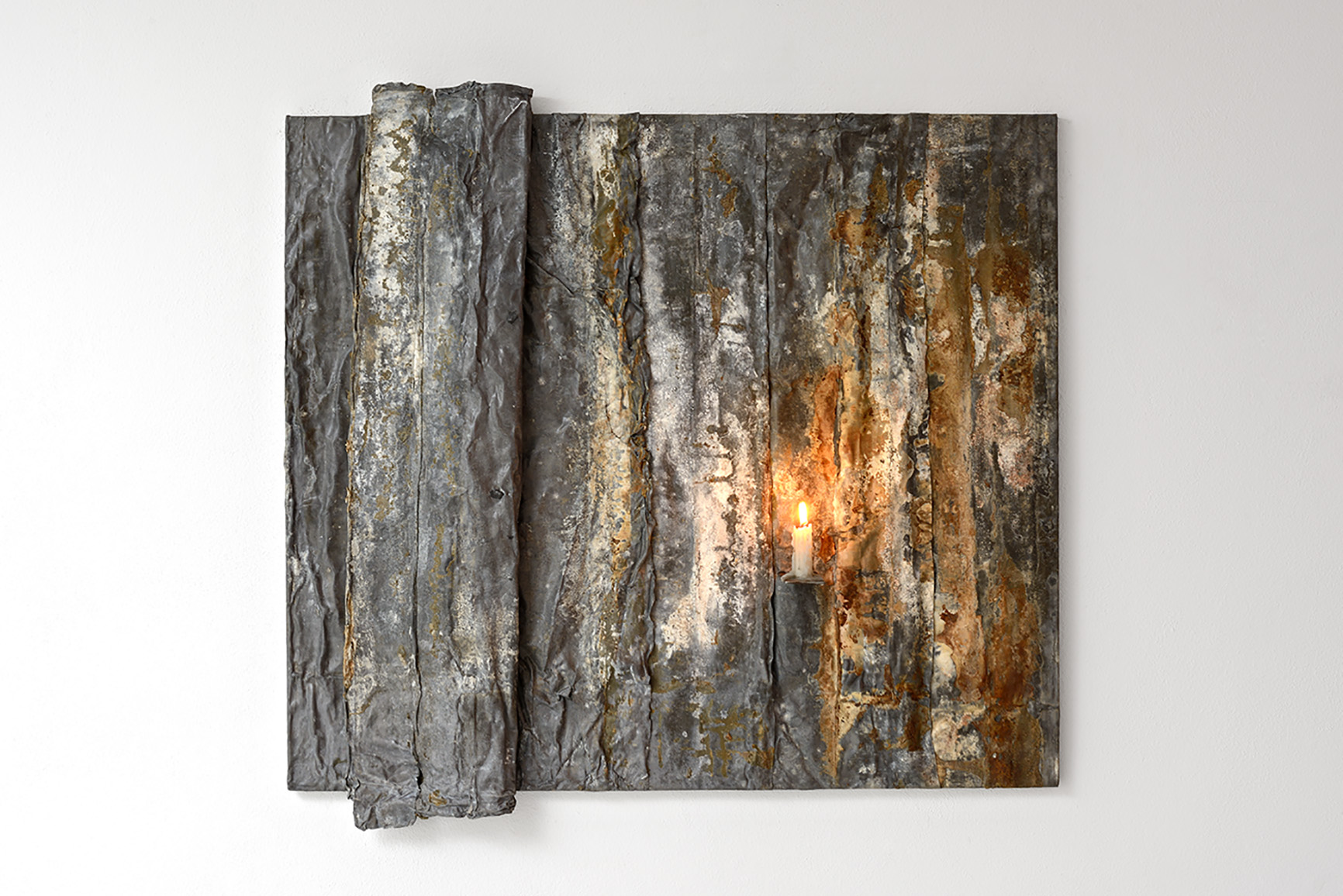

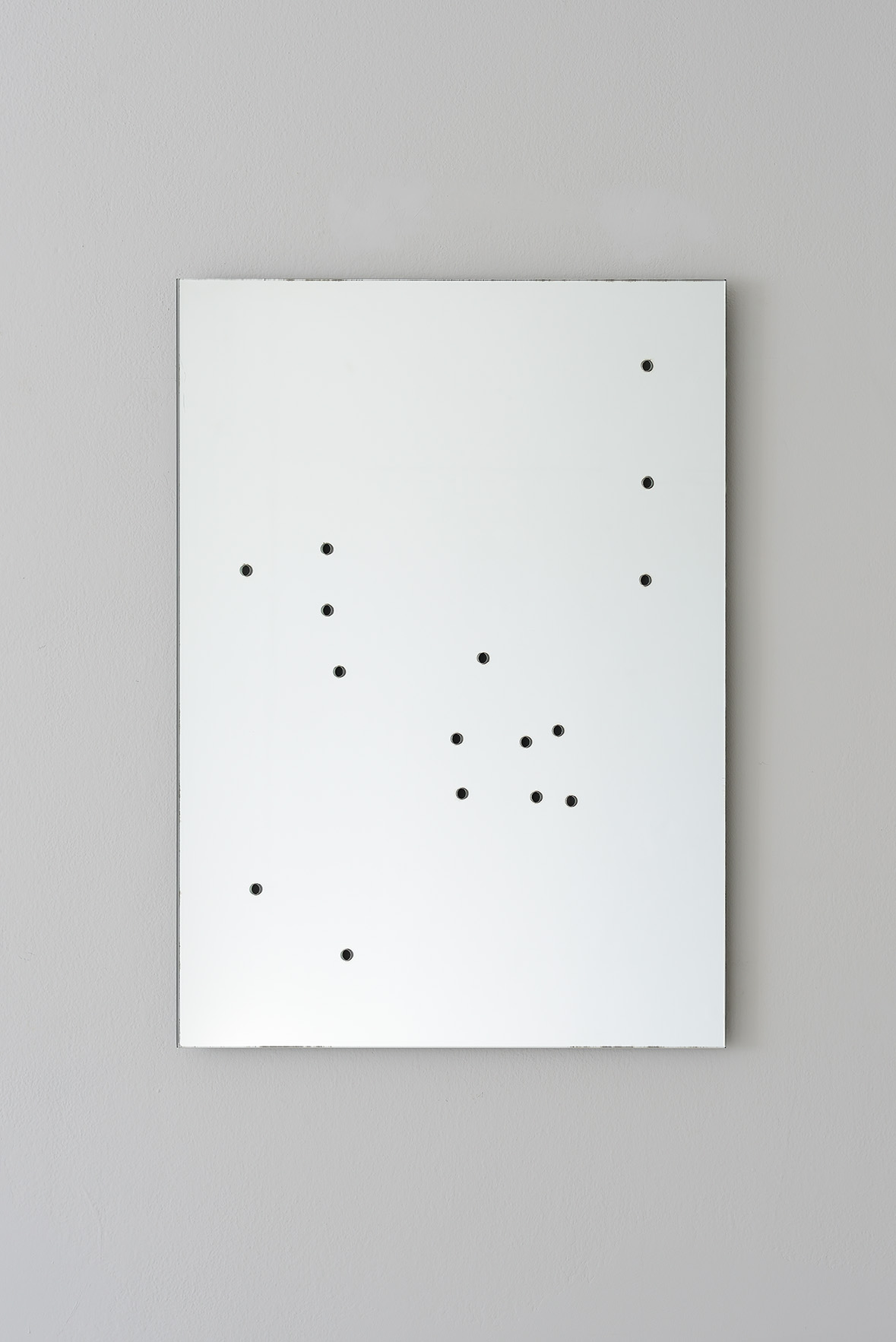

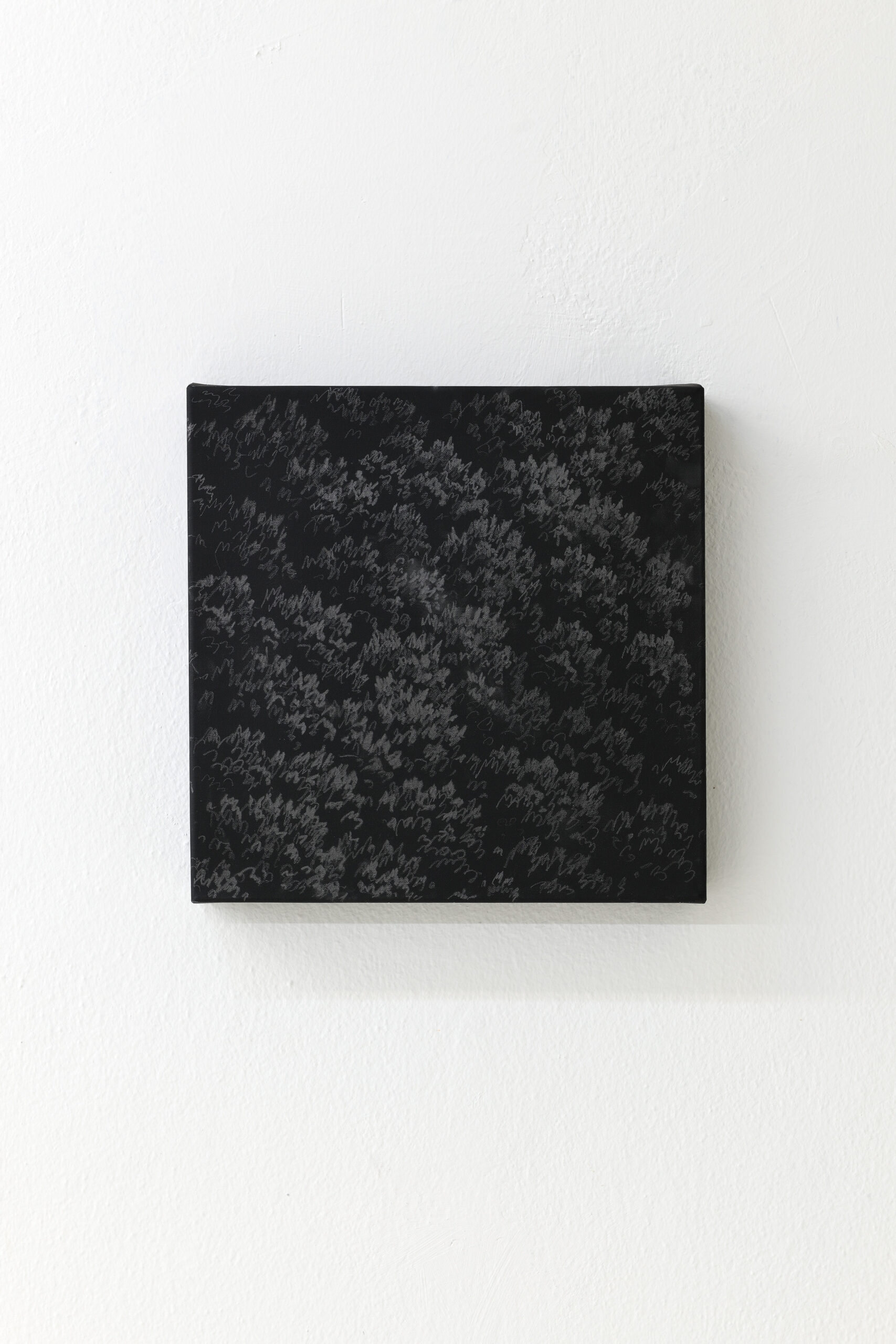
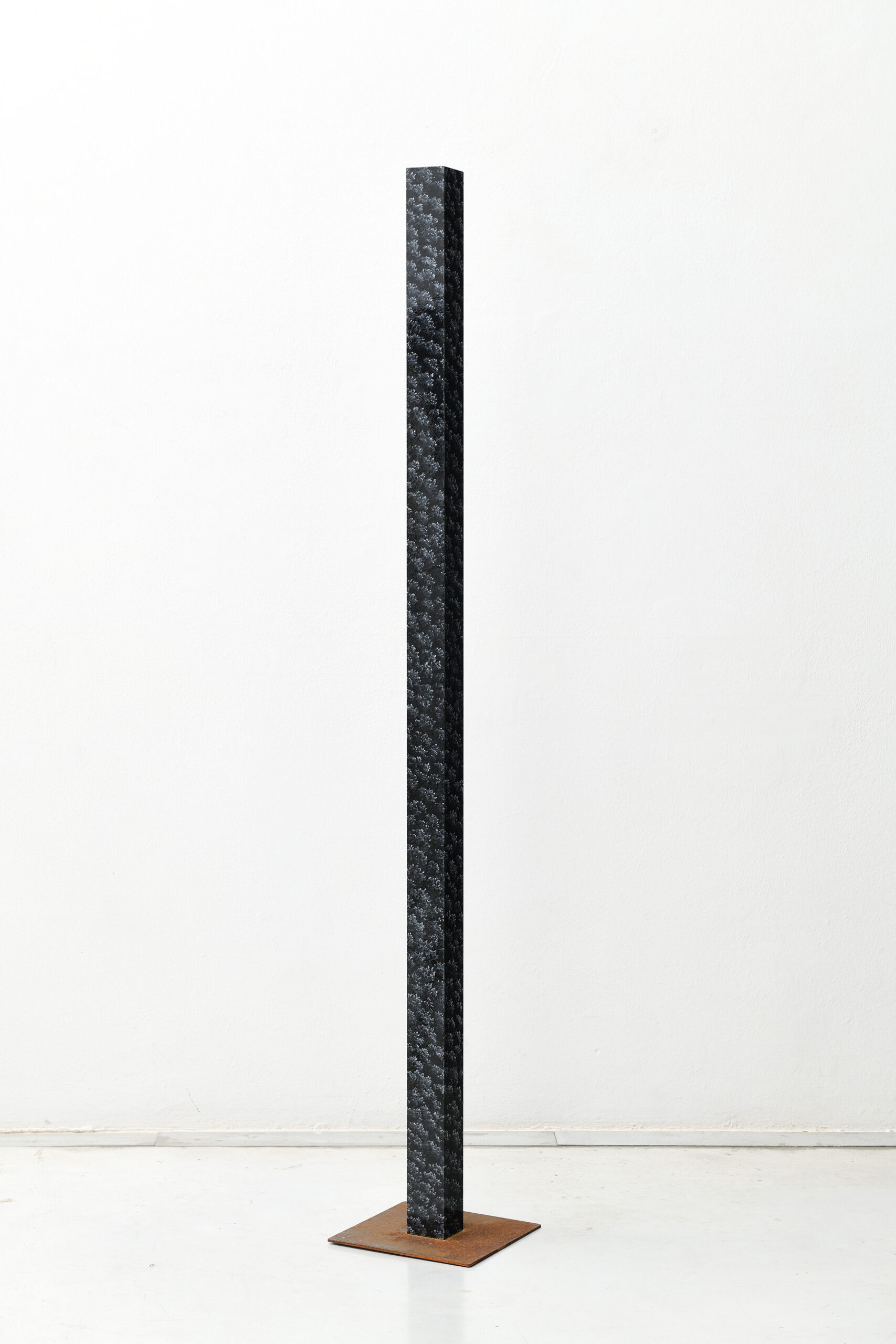

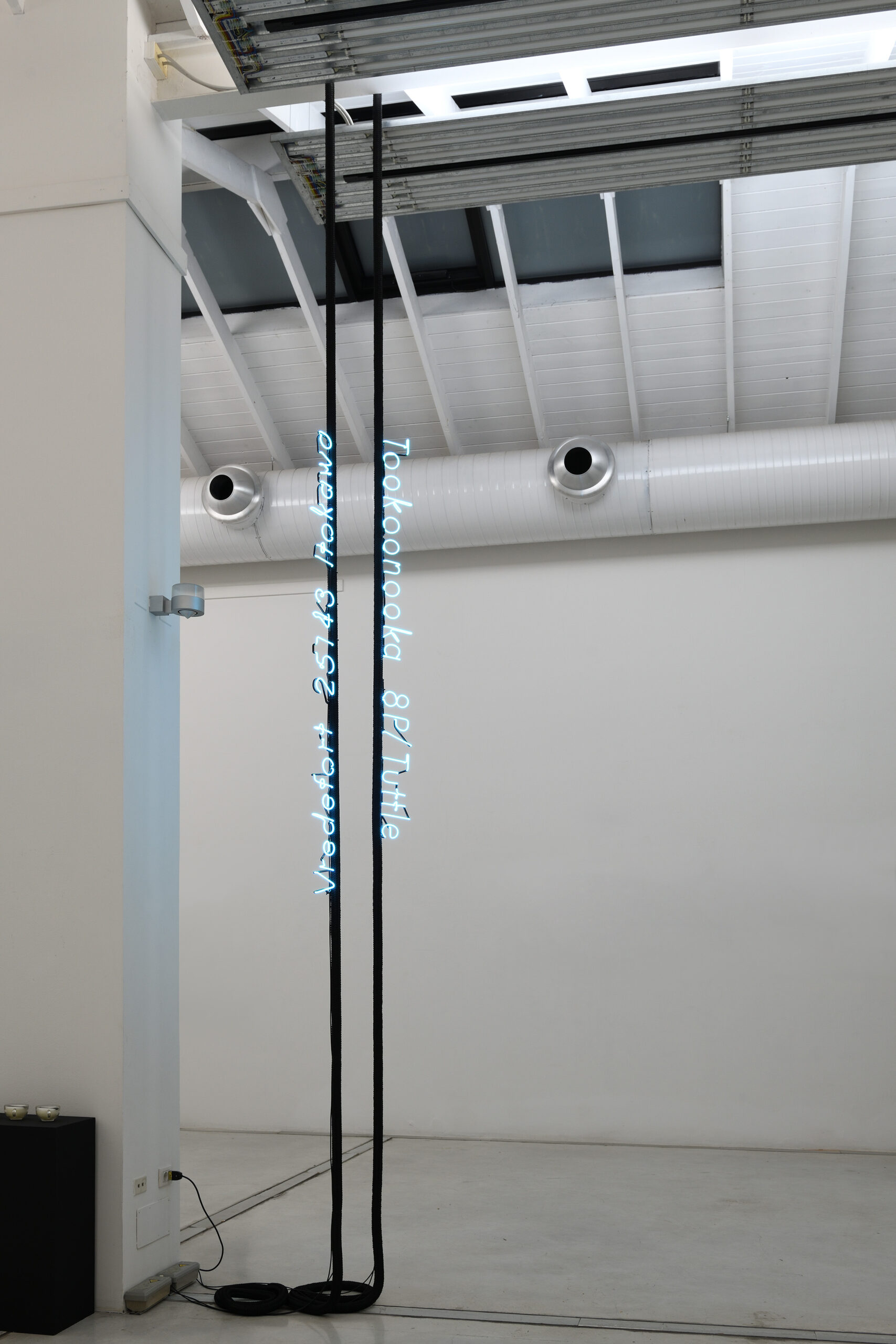
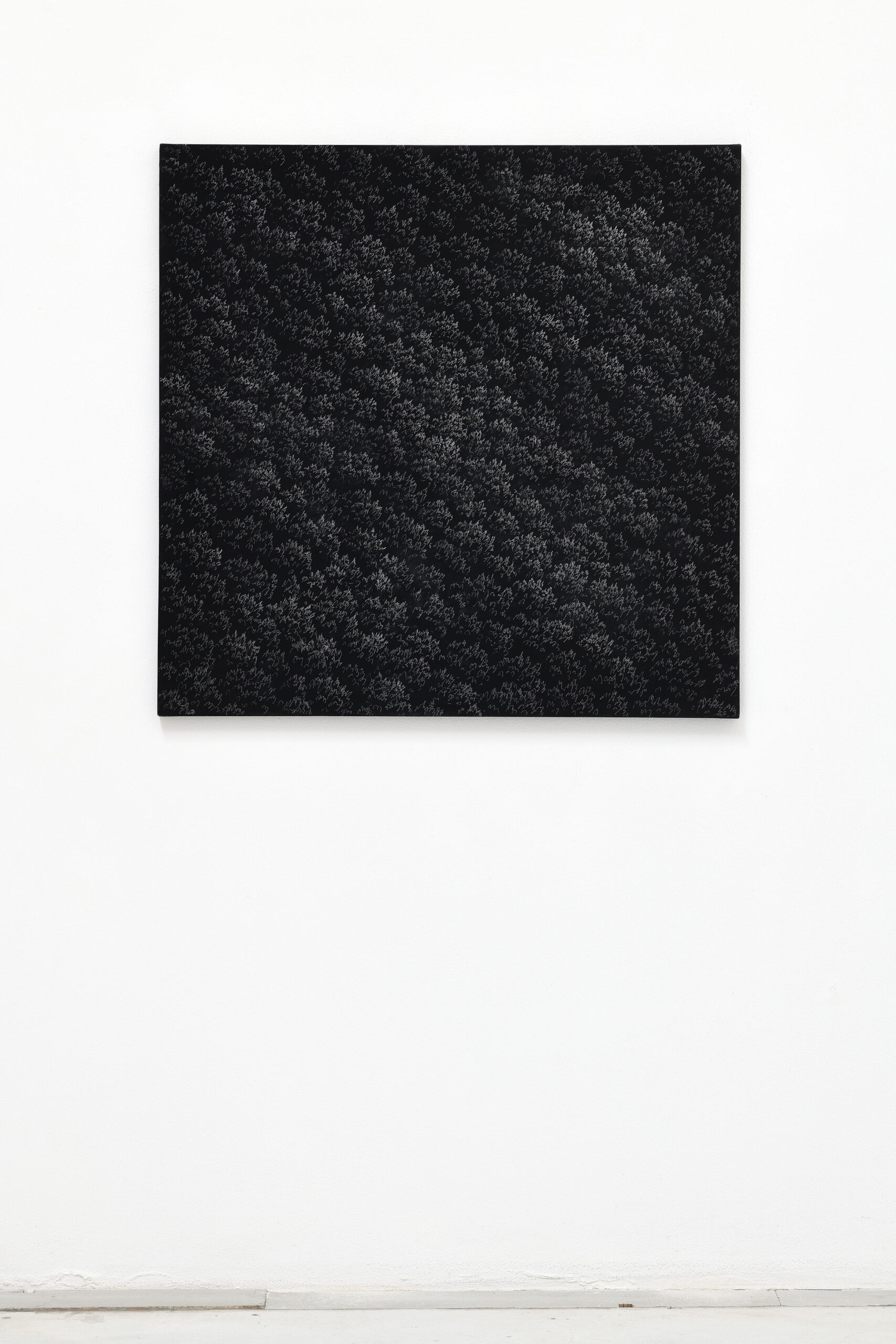
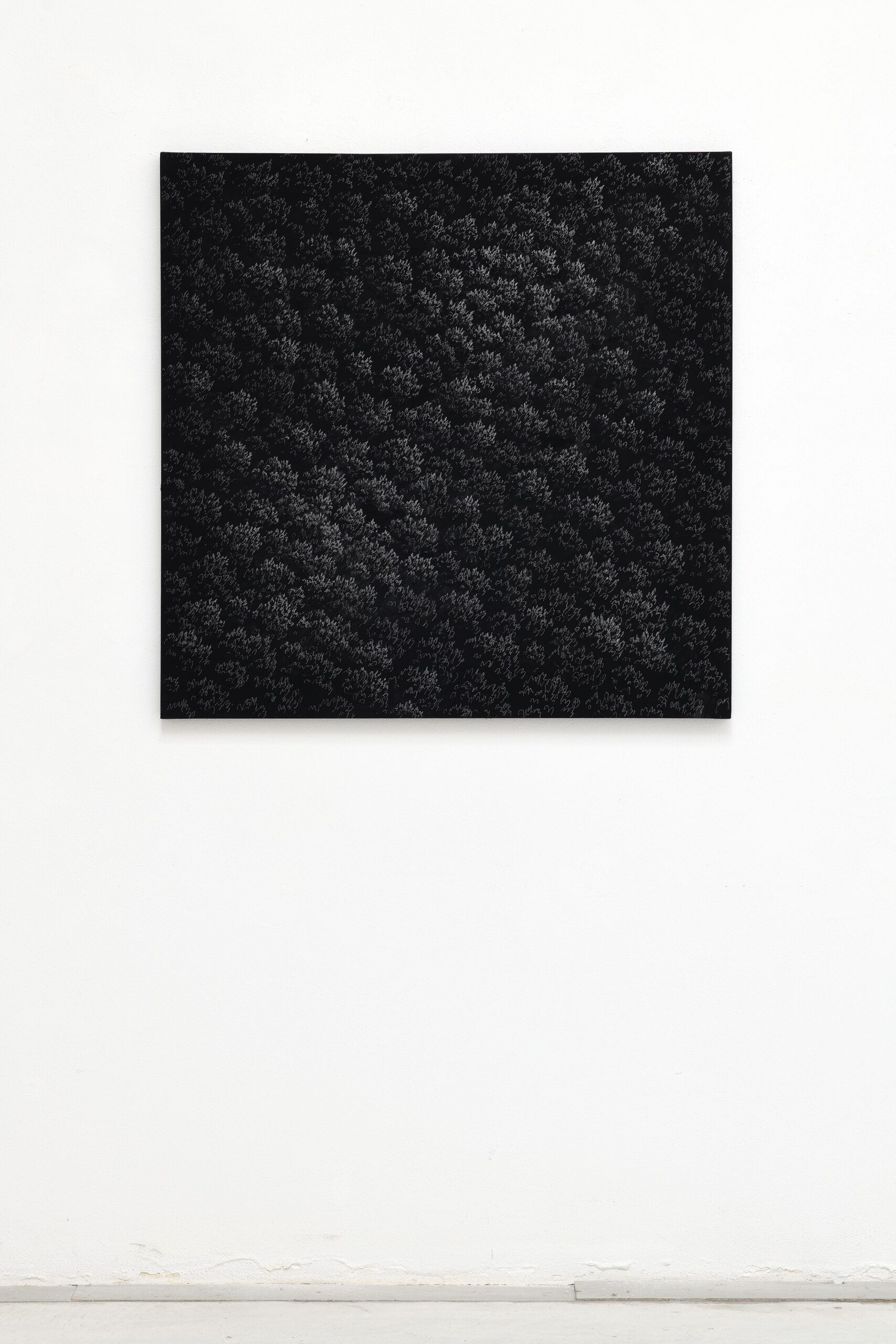
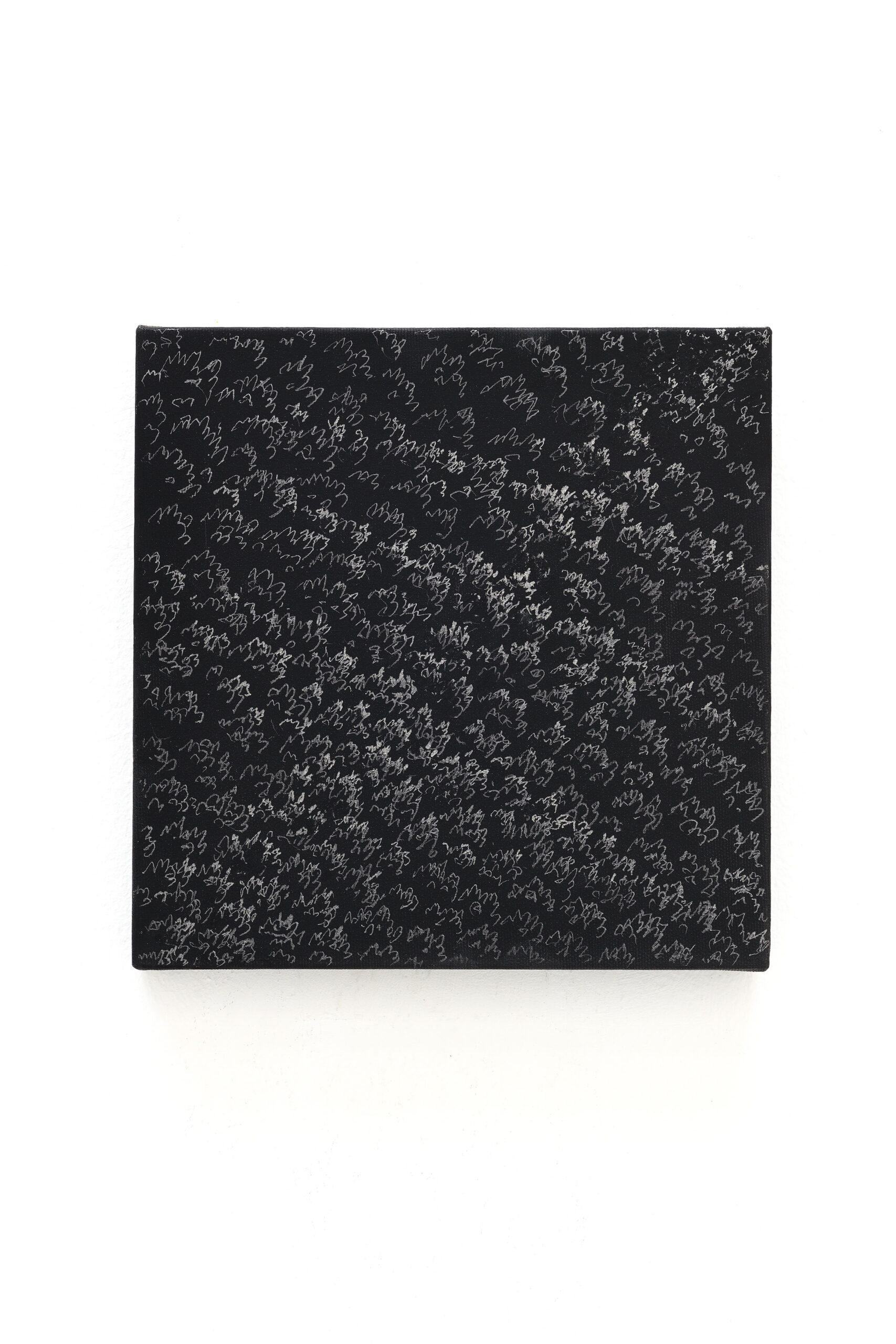

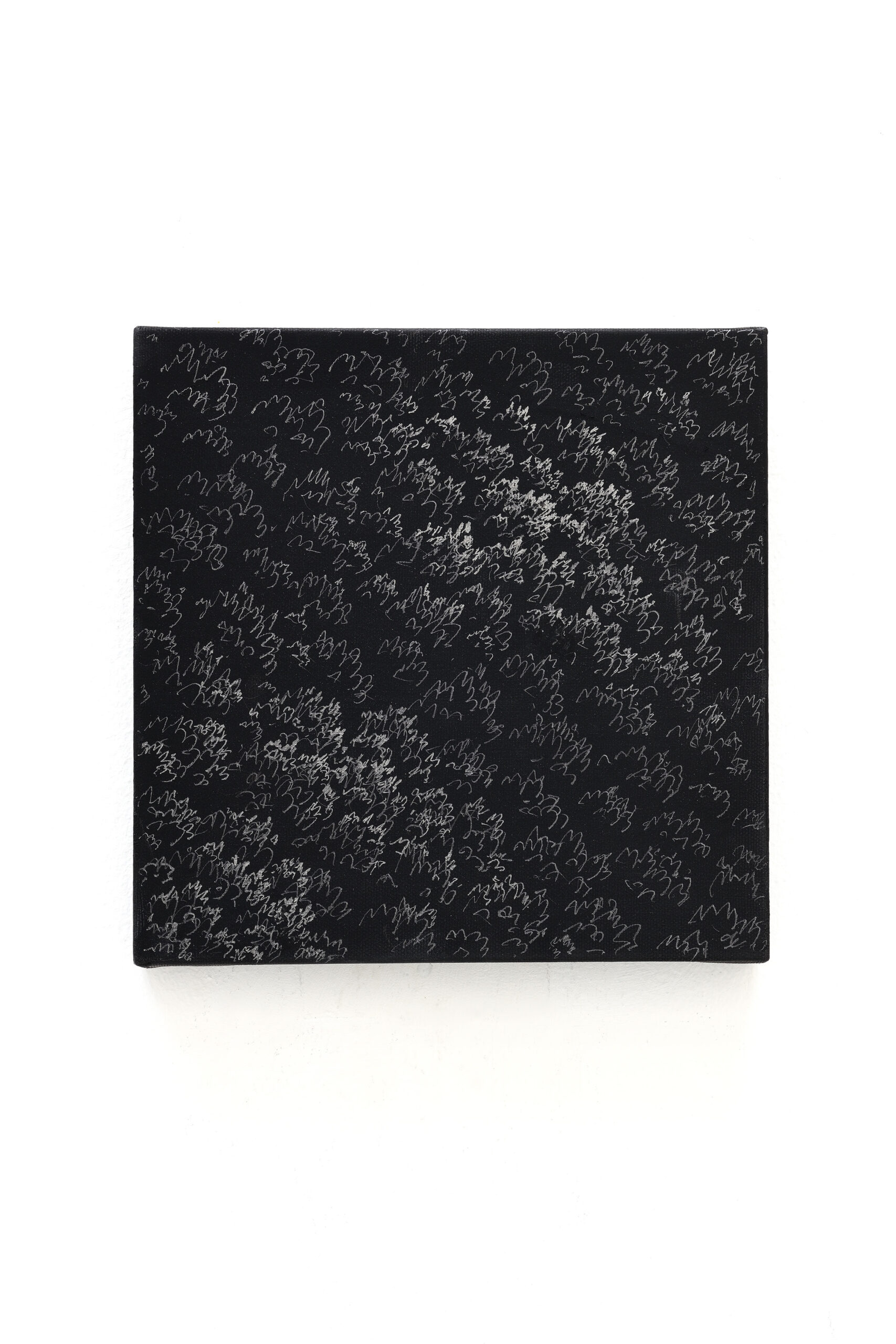
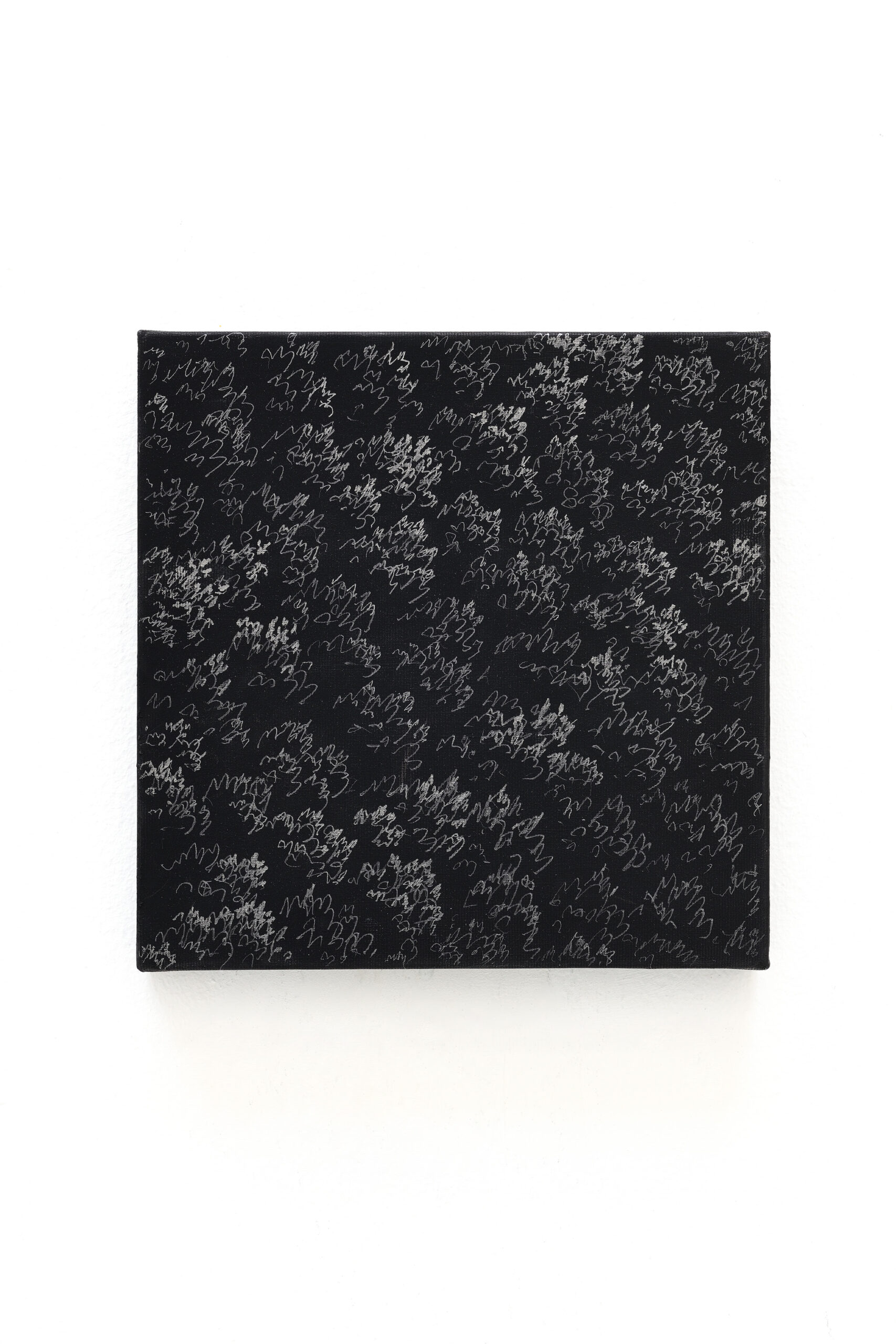


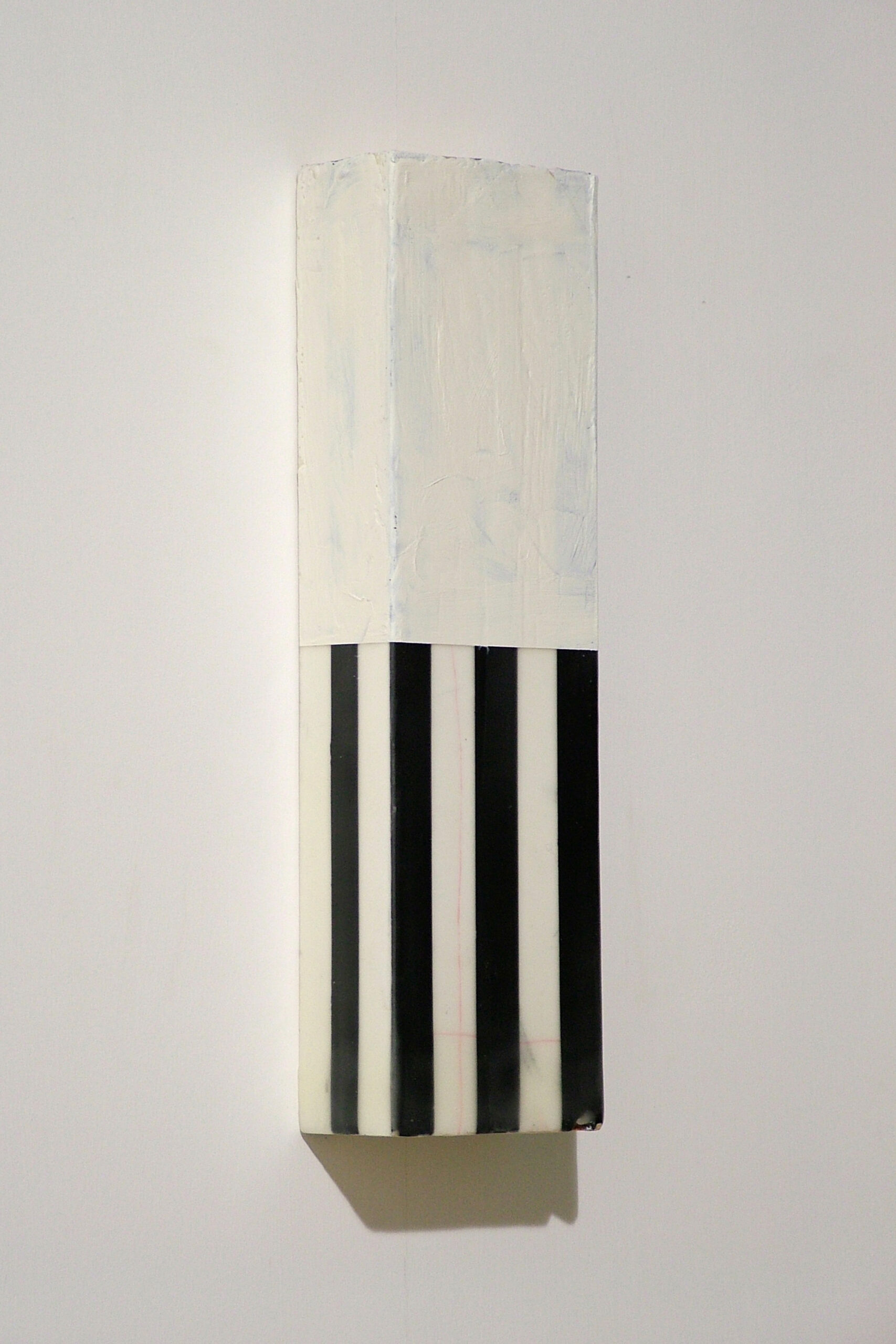


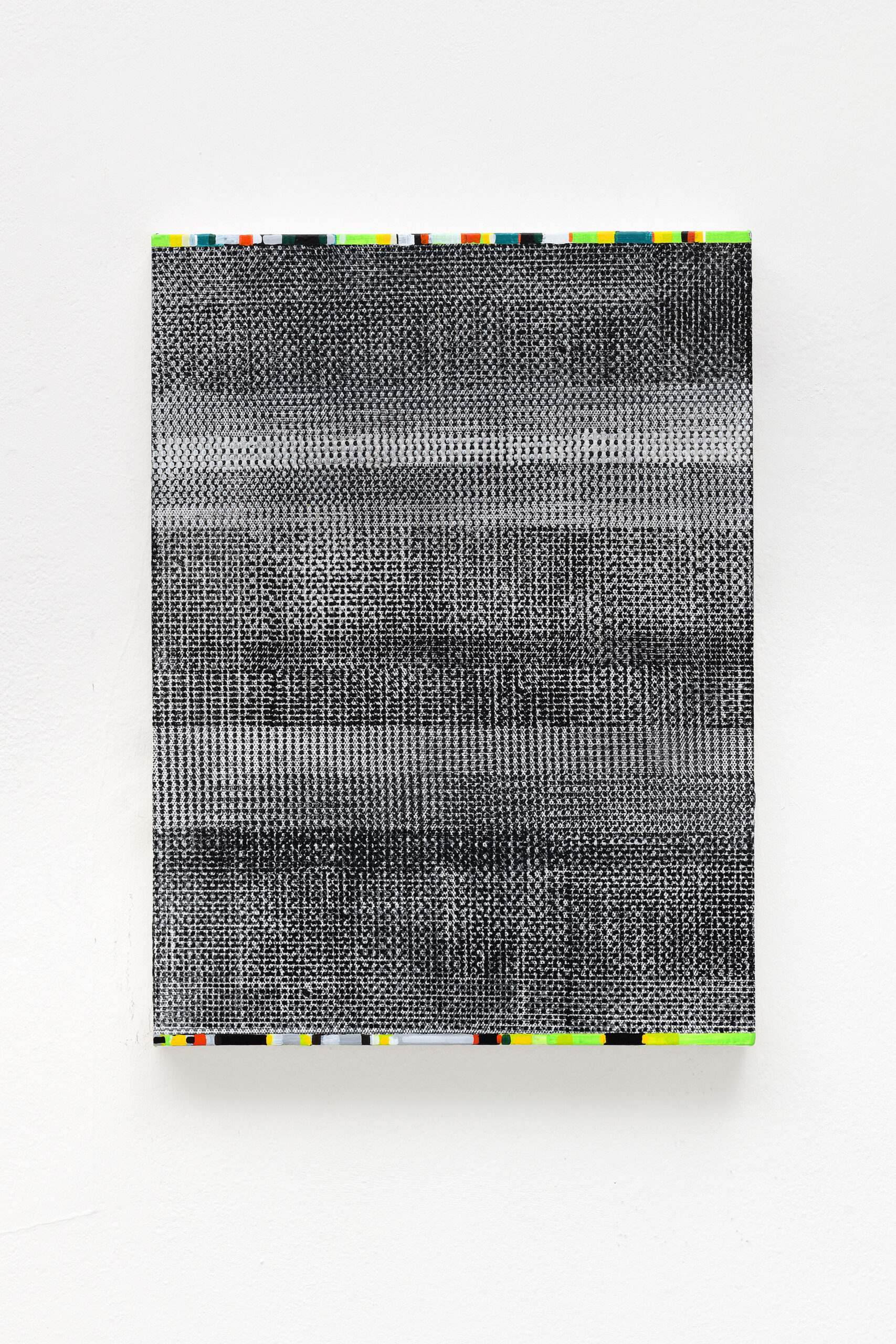
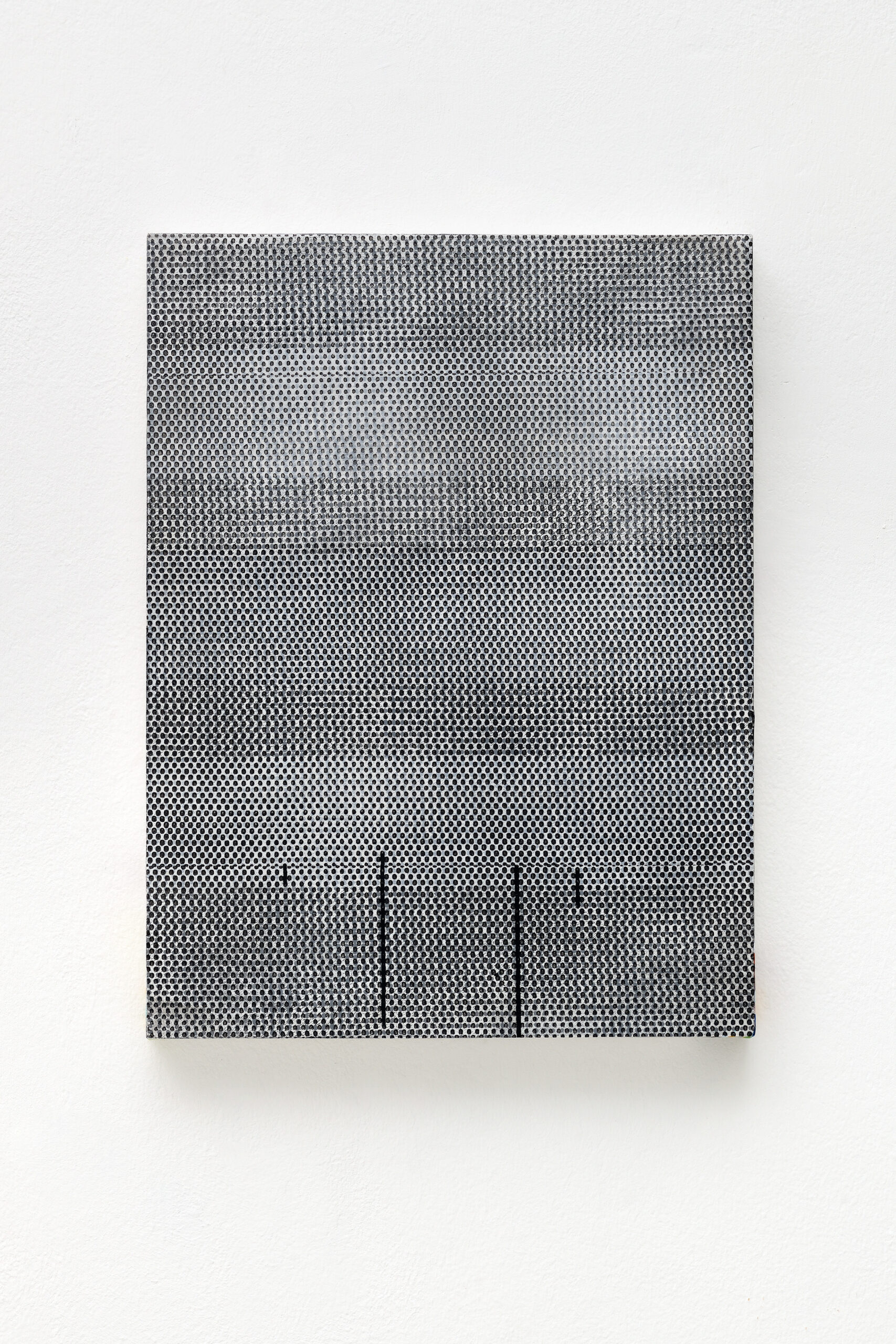
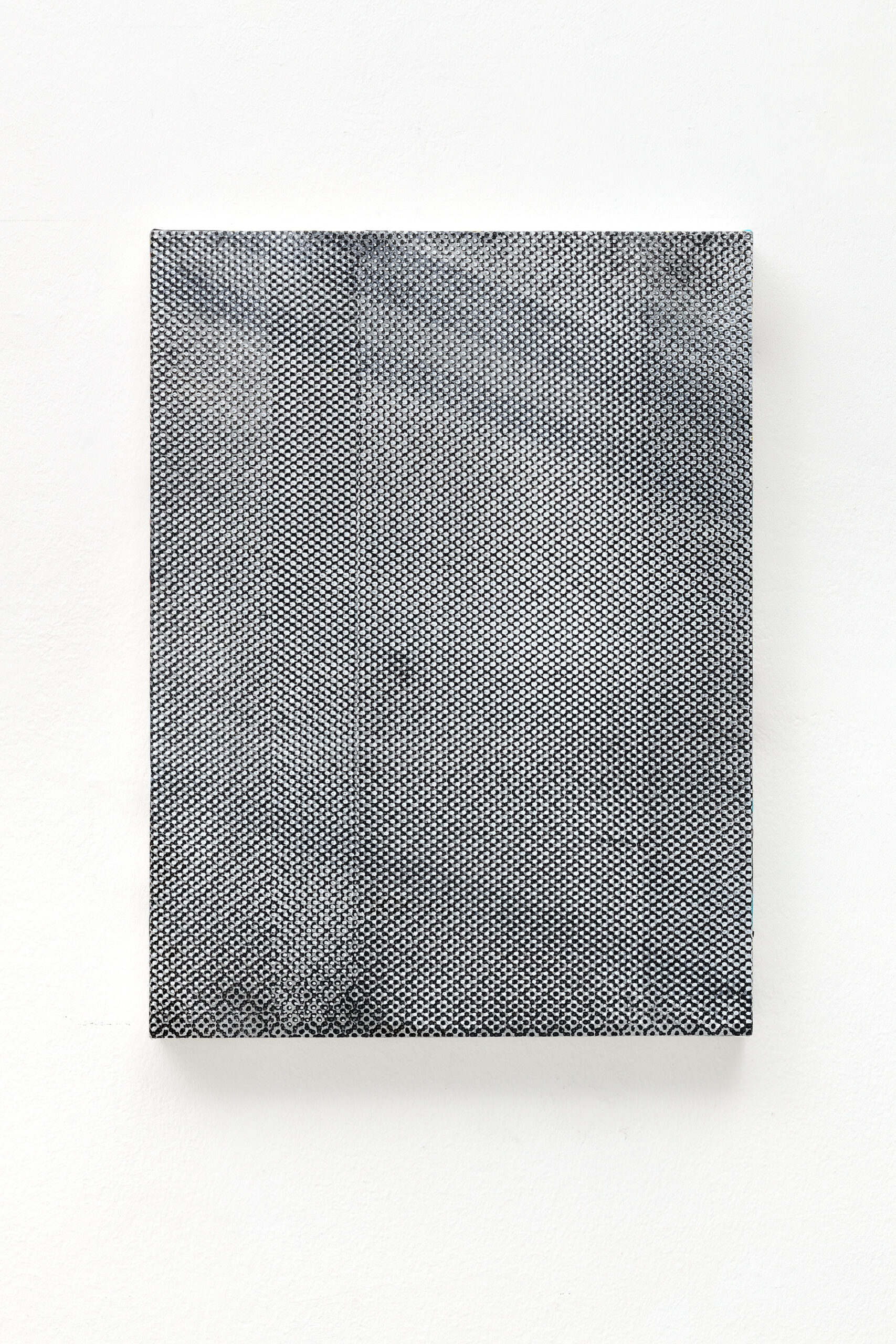
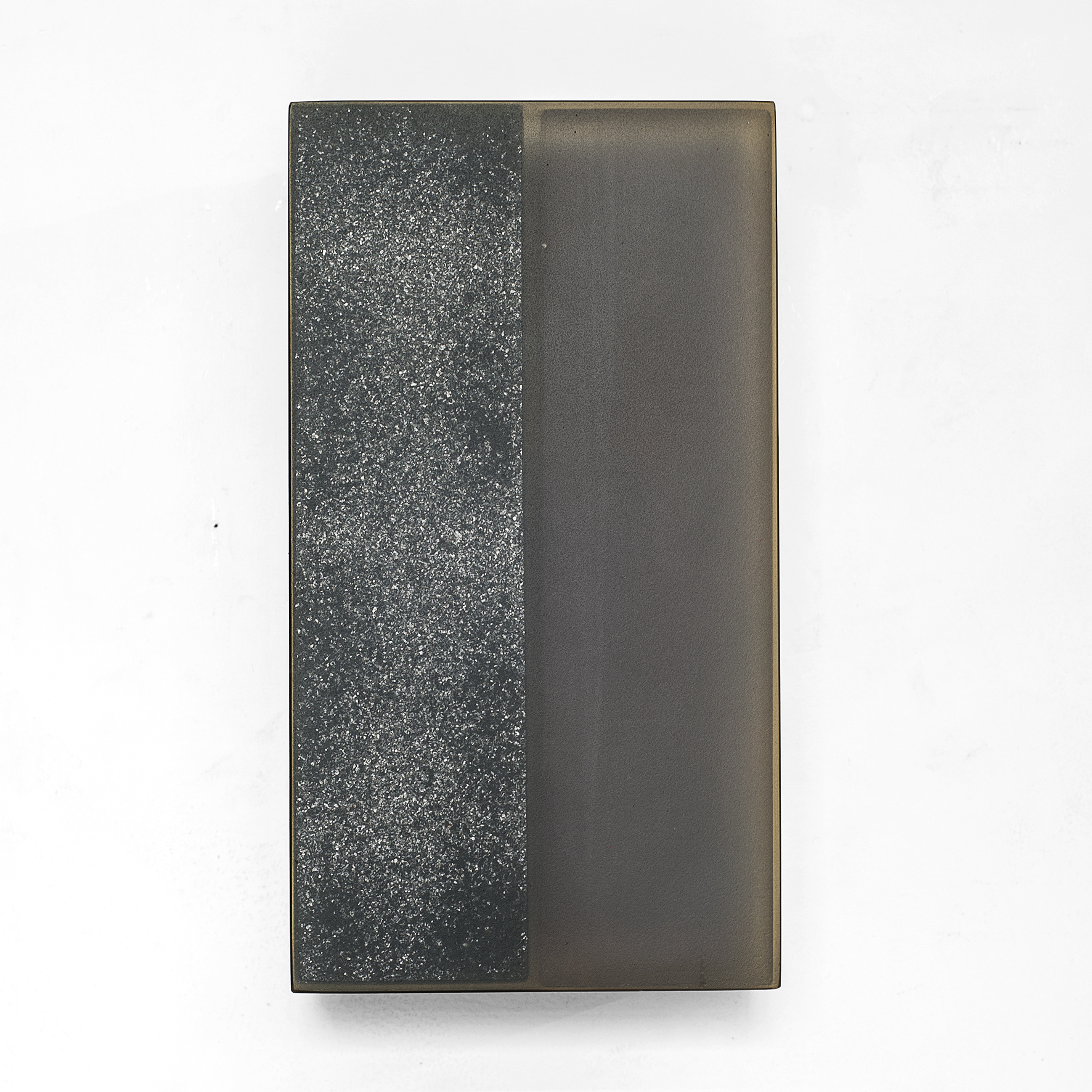


Discover the exhibition #ØØØØØØ through an immersive journey where art, taste, and perception come together in a new sensory experience. Set within an environment that transforms through light, art meets...
#000000
Black is never just a colour—it is a conceptual vector, a dynamic material, an existential signifier, a semantic tool.
The etymological inquiry into Black reveals a structural ambivalence that has shaped its use as a sign in language and art: a perceptual phenomenon with distinct meanings in antiquity that has been streamlined to “the absence of light” in contemporary days. Latin offered two key signifiers that anticipate a Minimalist approach to perception: ater, the matte, dirty black associated with negative connotations and root of the word “atrocious”; and niger, the dense, glossy black linked to refinement and elegance. This linguistic framework is organized by luminosity—whether a shade was matte or bright, dense or diluted— a more defining criteria than the overly broad category “Black.” This split between “dirty black” and “dense black” mirrors the tension between its symbolic charge of death and fear, opposed to its evolution toward dignity and social prestige; these nuances gradually eroded through linguistic shifts.
These semantic nuances catalyzed the evolution of black pigment, transforming raw material into a sensory-perceptual device. Pigment, an artistic and writing medium since prehistory, was originally derived from the incomplete combustion of organic matter, producing soot or charcoal, or from the calcination of bones in ancient Egypt, the famed Noir d’Ivoire: a spectrum of fully organic substances that eventually led to industrial Carbon Black obtained through hydrocarbon pyrolysis. Linguistic variety may have thinned, but contemporary Black is a container of more colors than ever.
The sociocultural trajectory of black forms a magnetic field oscillating between poles: negative—death, evil, sin—and positive—power, elegance, rigueur; between negation and authority. Since antiquity, although black signified death and malign forces, it was also expression of fertility and magic, representing in Egyptian culture the fertile silt of the Nile. In the fourth century, St. Jerome explicitly linked the “blackness of sin” to Satan, a notion amplified in the Middle Ages when Black became the dominant emblem of the Devil and of moral corruption.
Advances in dyeing techniques, however, granted Black a new positive social value: it became the colour of dignity, authority, and discipline. Adopted by jurists, academics, and rulers, it asserted itself as the antithesis of ostentation. With the Protestant Reformation and Spanish court fashion, Black became the emblem of morality, seriousness, and masculine elegance throughout Europe, later a key sign of the rising urban and industrial bourgeoisie—eventually elevated to the epitome of chic in Chanel’s petite robe noire—and simultaneously a marker of rebellion and marginality. Black shifts back and forth between elegance and subversion, feeding ever-evolving cultural constructions.
Okay… So what now?
In modern and, later, contemporary art, Black becomes an idea—a point of departure for the zeroing of form and for conceptual critique: metaphysical extremism, radical gesture, emotional depth, reflective surface, potential space, absence/presence of light… Black and blacks as vehicles for sensations with no name, for seeing light without windows.
“Art is Art. Everything else is everything else.” Ad Reinhardt
Ad Reinhardt elevated black to a central formal element, pursuing absolute purity through disciplined negation. His Black Paintings result from an “extreme and complete” reduction. Seemingly simple black squares, they demand performative vision—only through prolonged viewing and patience do their subtle tonal shifts and hidden cross-structures emerge. Reinhardt sought the invariant by eliminating subject, colour, light, pleasure.
#000000, this exhibition, grows from an idea and branches across varying elevations that graze the gallery’s history, of its founder, of the critical values that sustained it, and the parametres it imposed to pattern the value of the future.
In a particularly contemporary moment—when art seems hollowed out to become a container of aspirations, political values, personal statements, economic equivalences, intercontinental exchanges—returning to the founding ethos of Studio la Città may be a radical act: countercurrent, counter-fashion, affirmative. Here, today, Black becomes a formal and ideological reset, a device to mend, erase, uncover, meditate, move beyond.
“My painting represents the victory of the forces of darkness and peace over the powers of light and evil.” Ad Reinhardt
The color #000000, the digital maximum reduction of black expressed as a hexadecimal code, appears in the RGB system as the absolute absence of Red, Green, and Blue (0, 0, 0). Conceptually, it symbolizes the “zero of form” theorized by Malevich and serves as both limit point and point of origin for a color gradient—a progressive, incremental transition across tones.
Studio la Città
Lungadige Galtarossa, 21 37133 Verona – Italy
Until April 5th, 2026