What am I doing Here?
Marco Meneguzzo
In an essay written at the beginning of the third millennium, Marc Augé wrote one of those beautiful and evocative definitions that have become nostalgic images. In short, he says that history has both bequeathed and donated “ruins”, while the glamorization of the present day only leaves “debris”: “Recent history’s accumulated debris and the ruins left from the past have nothing in common”.
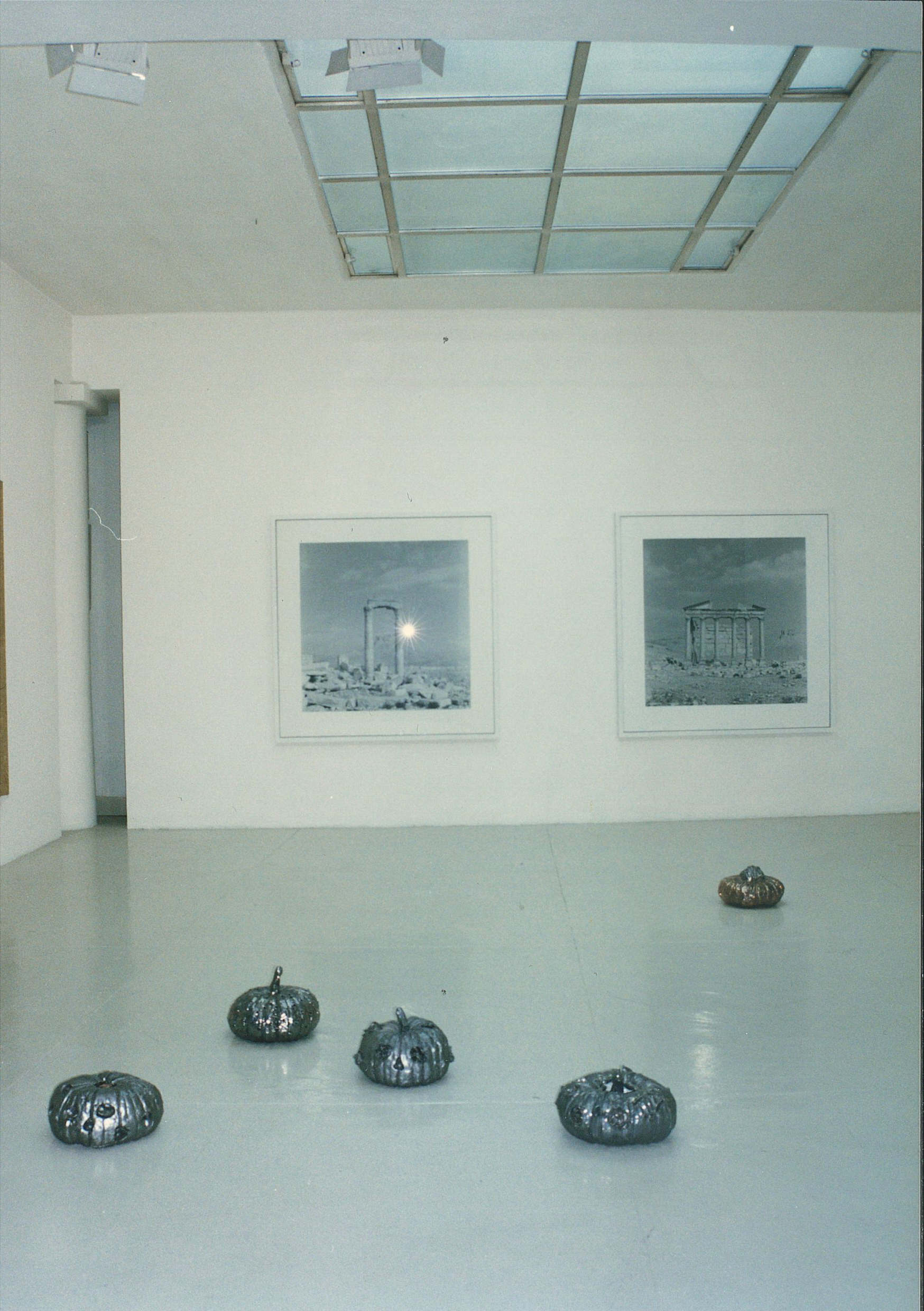
This idea seems to me to be the best way to start looking at this particular aspect of Lynn Davis’ work, with the silent presence of the Roman statues in the Venice archeological museum in the background. Perhaps a verse from “L’infinito” by Giacomo Leopardi would have been useful: “The present season and its sound, and the dead seasons in the face of eternity…”, were it not that our possible interpretation, unlike Leopardi’s poetry, might become romantic, sentimental, and all too likely to drift towards intimacy. There is, of course, romanticism in Davis’ activity, and it couldn’t be otherwise: there are the ruins of the past, the exoticism, the evident geographical and cultural distance, and the hinted-at temporal distance (suggested, for instance, by tinting the large photographs sepia, selenium, or gold). And so, in order to understand the reasons behind this “sentimental journey”, the best critical action to undertake might be a detached dissection of its elements, keeping in mind that any eventual ideal reassembly of the “disiecta membra” (we are still inside the national archeological museum, so a little Latin won’t come amiss…) will not be a kind of critical Frankenstein but, I hope, a mutual contemplative act, a kind of reconciliation with the world characterized by passing time: and this even when we consider that the works by Lynn Davis preceding and following this series might seem to us to be quite different. They are less involved with a sense of time and are closer to a search for absolute form. In fact, if we think about works such as those from the “Ice” series (2005 and 2007); the photos of the Eiffel Tower’s mechanical and architectural details which are part of the “French Project” (2001-2002); or the “Space” series (2002-2004), based on launches into space from all parts of the world, the artist’s interest seems concentrated on aspects of formal purity rather than on evocative or narrative elements: even the use of a square format concentrates our gaze without “distending” it in a diachronic reading from left to right, as with classical horizontal landscape formats. However, in the works under discussion here, there are decidedly strong, collateral elements which are evident and universally evoked – for instance, the desert, implying journeying; or ruins, which speak to us about time – and which stand side by side with form and history to become the image’s co-protagonist and create a “life of forms” behind the form itself.
So let’s begin at the beginning: ruins. As has been said, ruins recount history because history is tied to development, development is tied to time, and the perception of time is tied to human beings. We might even be led to think that human beings constructed their monuments having already foreseen that one day they would become ruins (before being the object of an essay by Marc Augé, and even before what was communicated visually by Giovan Battista Piranesi in his “Views of Rome”): in other words, the vestige of a time that becomes timeless and that is continually reinterpreted, even while the persistence of the mystery of ruins remains its emotive starting point . Lynn Davis’ photographs are fully a part of this concept and perpetuate the possibility of information and communication that no longer seems adapted to, or even available for, this kind of vision. For this reason, photos that are, deep down, so purposely traditional, so much a part of an Anglo-Saxon kind of “travel literature” (and I use the term “literature” on purpose), manage to be so unexpectedly surprising. At a time when we are so used to the speedy perception and consumption of the world and its image, to find an oasis where time has the characteristics of a “timeless” place is a surprise that forces us to rethink our whole system of perceiving reality. In fact, what seems to us to be extraordinary is that the “timelessness”, intuitively perceived and visible in the works by Lynn Davis, has been captured “now”. We would have had no difficulty to place in this category works from the past, even the recent past, such as, for example, journeys at the end of the nineteenth century: we would have seasoned it with that incipient spirit of modernity that aimed at getting to know and to occupy the globe, with that idea of a “record” that, in effect, makes up the greater part of the content and even the very idea of a museum (and to enter an archeological museum, as we shall see, also has both the character of a challenge and, at the same time, of mimicry). But Lynn Davis demonstrates that “timelessness” is “now”, as I said earlier, and so such tranquilizing categories as “records”, “catalogs”, and even “journeys” lose their importance, at least with regard to that romantic idea of going to discover oneself in the Other, something that seems impossible to do today even on a journey to Mars (deep down, the readers of Bruce Chatwin’s “In Patagonia” are incurably nostalgic). But if these categories – which use the past as a kind of trunk in the attic where we can deposit things that are dear to us but which we will never use any more – have less importance in the face of the evidence of these works, what can we use in their place in order to appreciate the works, and not just in a formal way?
The first and simplest explanation would be to consider them simply an extraordinary example of art historical quotations. In other words, something that artfully reawakens nostalgia for a past that can never return. Now it is undoubtedly true that in Lynn Davis’ works a certain amount of yearning for other worlds and times is an important part of the undertaking, but to consider these series of works as pure nostalgia is completely off track and, above all, extremely reductive. With regard to this, though, it is as though the artist had laid an intellectual trap for the mind behind her eyes by placing in the foreground all those formal elements that push us towards this, rather superficial, analysis. If it were not for the large dimensions of the works – which could anyway be new prints of a vintage original – we would all agree to place them in an indefinite yet past epoch: the tinting that has already been referred to, the silver-salt printing, the kind of photographic paper, the sharpness of the printing and, above all, the framing of the monuments which we are no longer used to seeing isolated. They are abandoned in the desert, without that swarm of tourists which represents the reverse of traveling, and can fool a sufficiently cultured yet basically lazy mind and force it to give a verdict of formal quotation, even though certainly accompanied by sincere appreciation of the capacity, knowledge, and even virtuosity seen in each individual shot, in each individual print. But “we know”. We know and cannot not know, because contemporary art excuses everything except an awareness of the context. These photographs have been shot today for today, and all the formal artifices for photographic perfection deployed by Lynn Davis are not aimed at reconstructing the past but, rather, at exploiting them in order to look at the present with other eyes. Lynn Davis exploits the past because with all the clarity of her works, which is not simply formal clarity, she pinpoints a possibility for knowing the world which she does not believe to be superseded but simply confused by millions of banal images – perhaps even of the same places – that exclude that “metaphysical” aspect from our visual field, the aspect that might explain the essence of things rather than their appearance. And in this case it doesn’t even matter – unless for an extra and genuinely lateral narrative addition, and for our human and touching participation – that the reason for these journeys might initially have been a personal and painful one, such as the sudden loss of a young child, because that aspect belongs to individuals, while the aim of following in the footsteps of Ibn Battuta – the Islamic Marco Polo, an indefatigable fourteenth century traveler – has the meaning of a will to communicate that goes far further than personal motivations. “One can travel even now” and “the places still exist” seem to be at the back of Lynn Davis’ mind, translated into images that, seen in this way, seem to be absolutely unequivocal and conceptually counter-current. In order to reach this aim the artist cleverly uses all the traditional elements of travel: first of all “distance”, that element that seems impossible to find today and which, instead, Lynn Davis reveals to us and exalts. And so, even if it seems unfeasible in a global situation such as ours, the artist wins the challenge and manages to be “exotic” by translating this rather faded adjective into a proactive hypothesis of cultural distance and, therefore, of possible innovation for knowledge and comparison. (It is not by chance that we are dealing with places almost always between the Middle East and Central Asia, in those Islamic regions which are so little known and where so many religions are mingled …) And not just that; she also manages to establish a temporal distance, both as a result of those geo-cultural “differences” I have just mentioned, and of the capacity to restore a sense of lengthy time, so lengthy as to be incommensurable and thus near to the idea of eternity because of the concept of “ruins”. How much sand did the wind bring to smooth those forms that rise in the desert and that are now sinking into it? And those black-gowned women? Where are they going? To a grave, to the Sepulcher?
If we begin to pose these questions to ourselves it means that Lynn Davis has won her challenge.
Postilla antiquaria
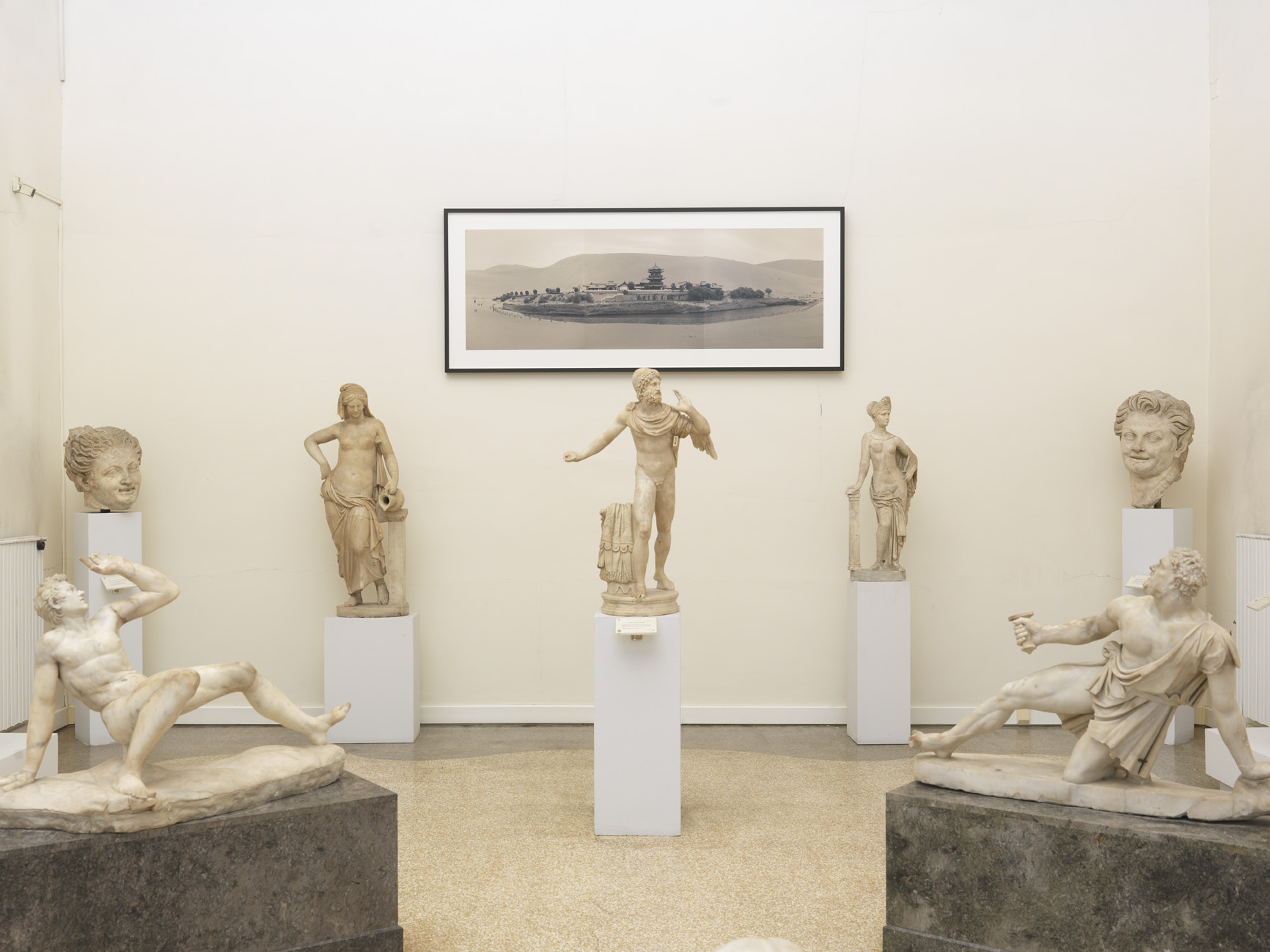
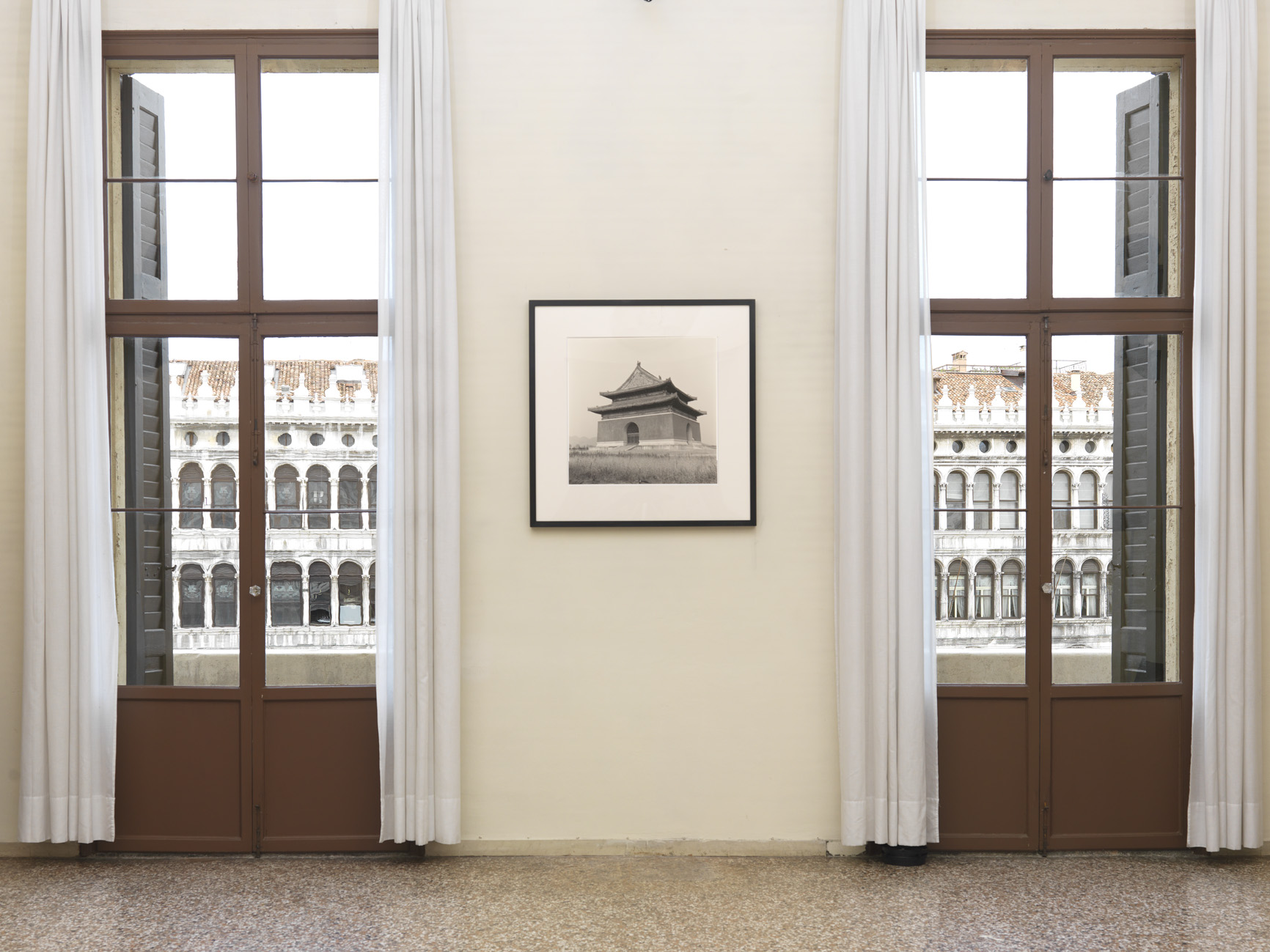
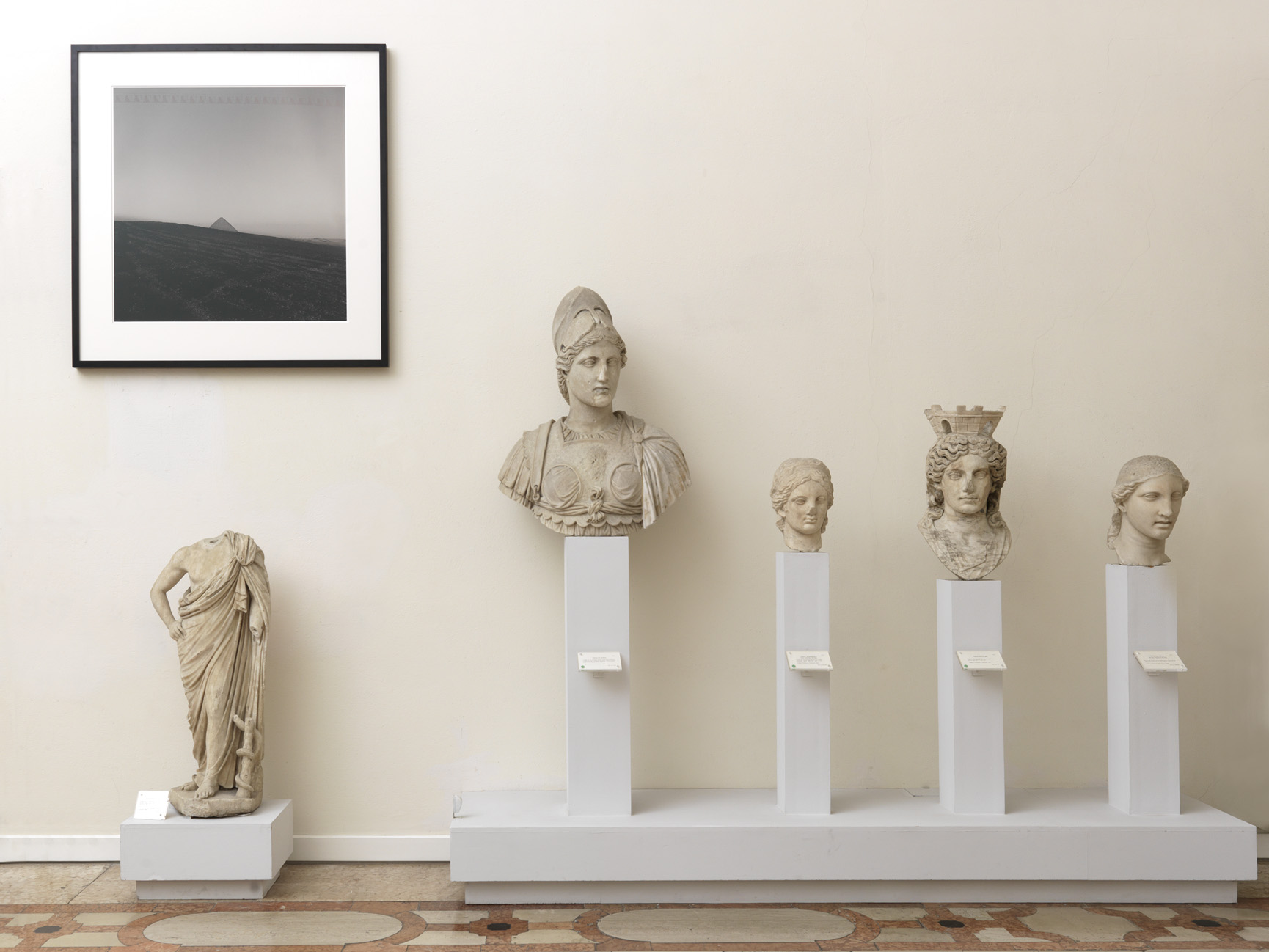
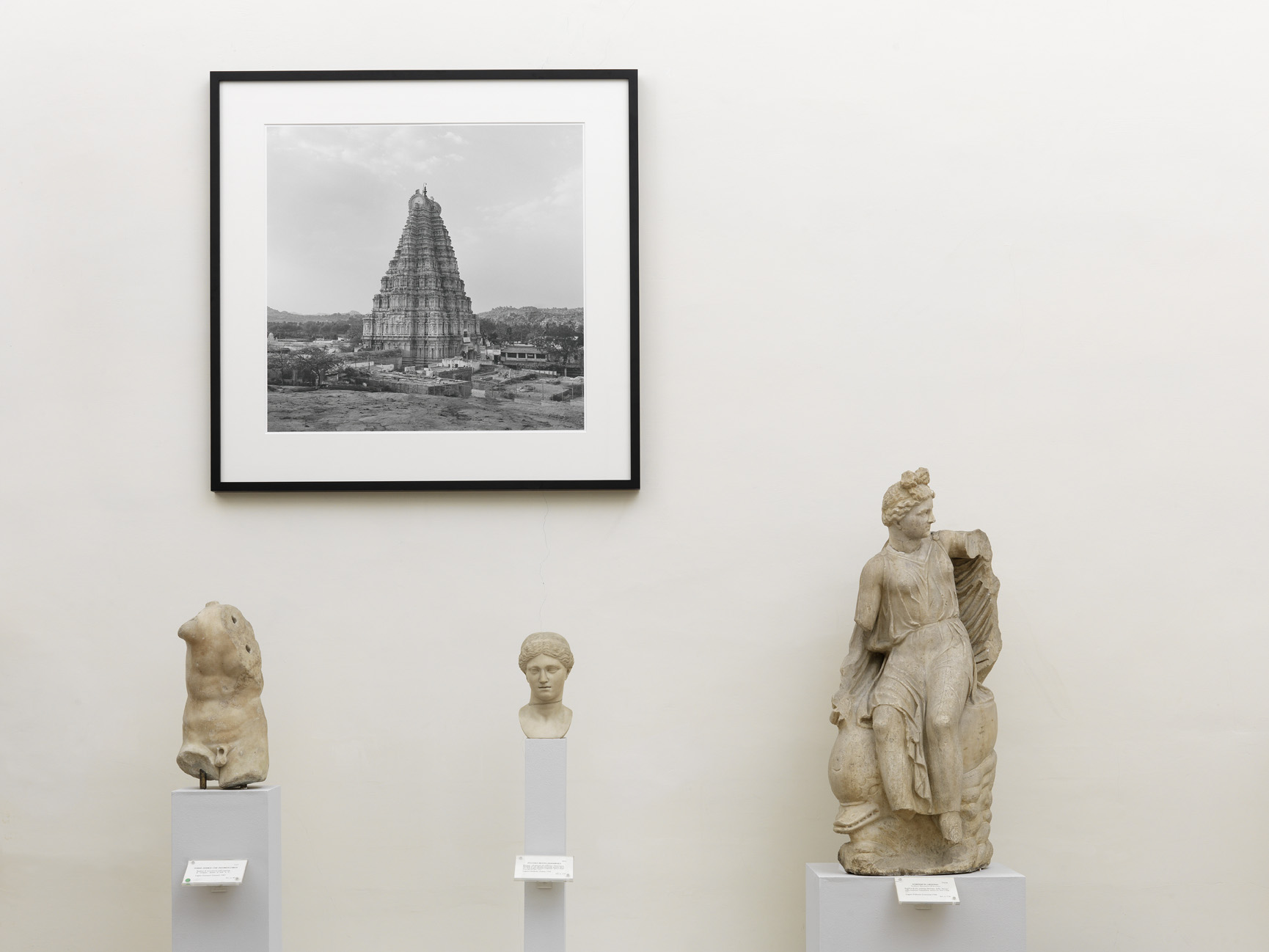
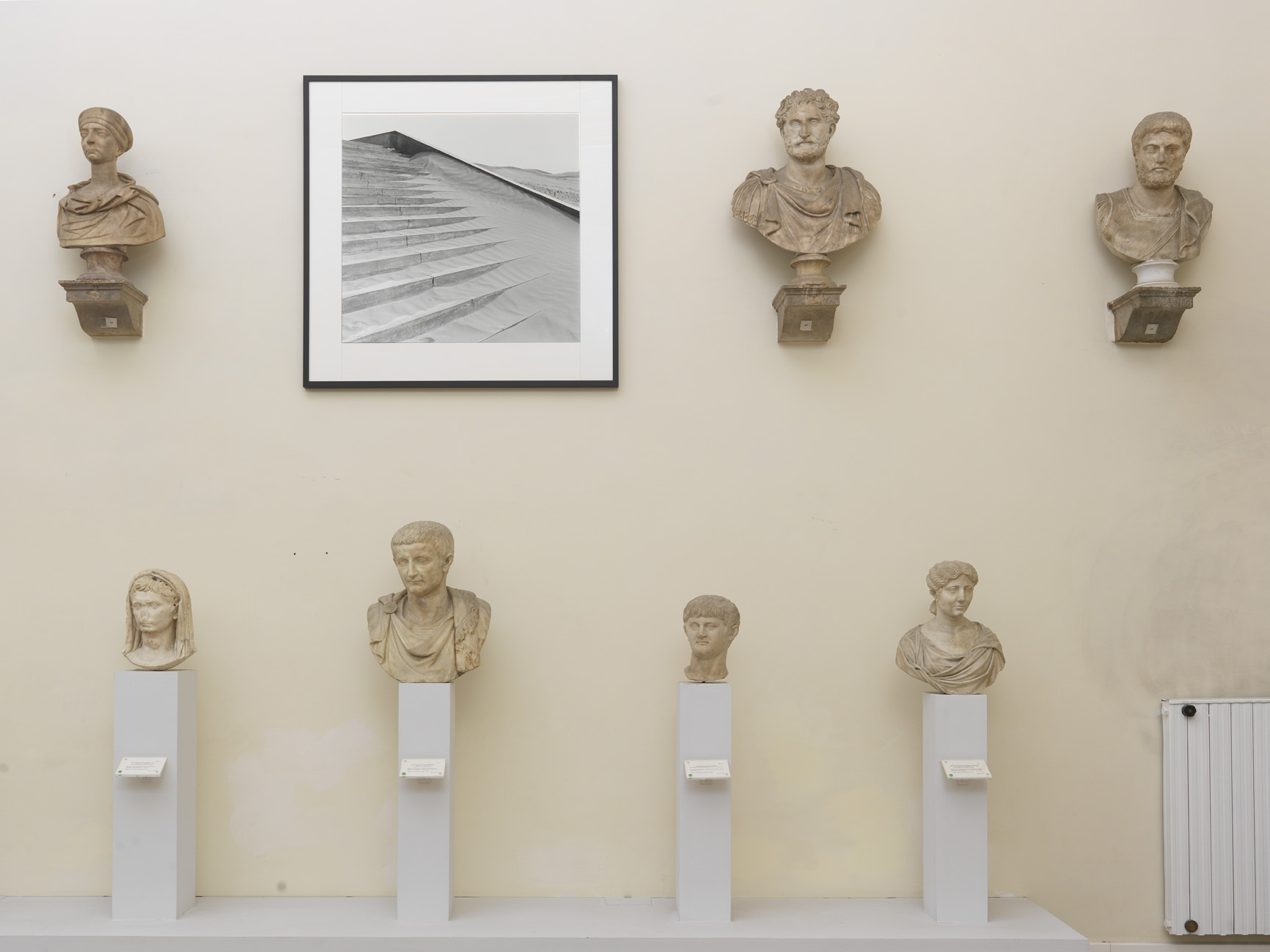
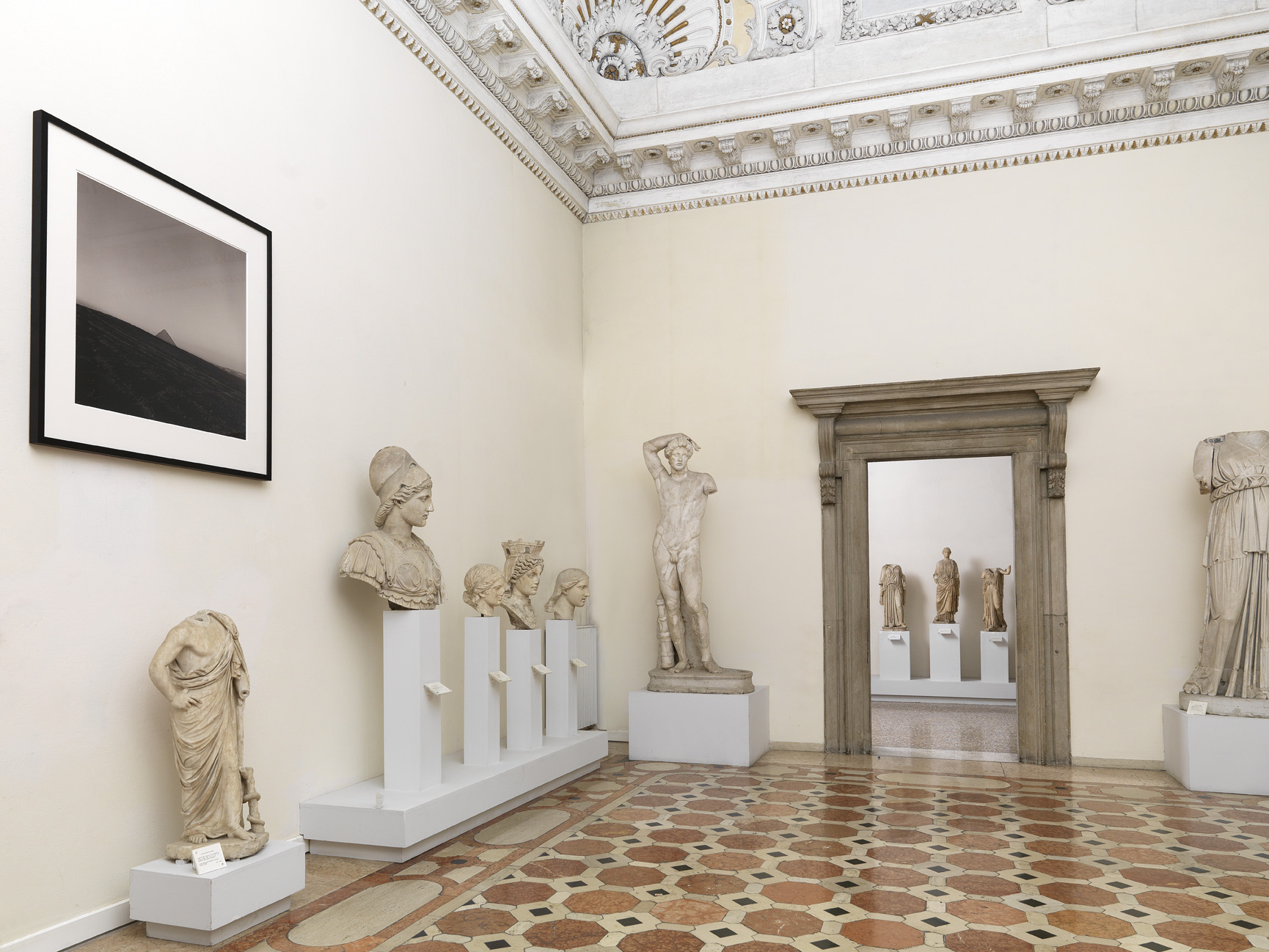
Even the happy coincidence of an exhibition in an important archeological museum is part of that subtle challenge which reveals Lynn Davis’ works to be on a conceptual cusp: on the one hand, with their quotations, sense of tradition, perfection etc. they might be considered a kind of tranquilizing antiquarian pastime; but on the other hand they are a penetrating provocation that forces us to verify the very idea of museums and, at the same time, to test the strength of the work they undertake. The mixture of past and present, of openly contemporary works and antique reliquaries, is not new; by now there exist innumerable examples. But in this case the confrontation is sharper because Lynn Davis’ works purposely “resemble” certain artifacts from the past. So the museum can be the “trunk in the attic” which I referred to and which also encloses memories that are dear to us, such as these works, works that accompany these busts and Roman statues which have had to bunch up a little to make space for the new arrivals. Or else it can be a living place where the corrosive introduction of contemporary elements – however much they are disguised as sumptuous souvenirs – also confers on the antique works it conserves a quotient of topicality that would otherwise be invisible. I tend towards the second hypothesis.
National Museum of Archaeology, Venice
2012