Andrea Fogli, Atlas Partenope
Museo e Real Bosco di Capodimonte, Naples, Italy
23 October 2026 – 31 January 2027
Curated by Vincenzo Stanziola
October 2026 – Andrea Fogli presents his latest project, Atlas Partenope, at the Museo e Real Bosco di Capodimonte in Naples, Italy. The exhibition (23 October 2026 – 31 January 2027) follows the recent retrospective at Palazzo delle Esposizioni in Rome, which brought together the Seven Atlases (7 Atlanti), encompassing the artist’s principal bodies of work produced over the past 25 years.
Atlas Partenope, the first previously unseen chapter of a new, eighth Atlas entitled Atlas of Devotions (Atlante delle devozioni), is devoted to what the artist calls the “Neapolitan imaginal galaxy”: “What city could be better suited to inspire an atlas of devotions than Naples? Here, a statue or a volcano, a dream or a daily ritual, a skull, a mask or an extraordinary footballer still each commands its own very particular cult.”
“Following the exhibition by the master Emilio Isgrò,” notes Eike Schmidt, Director of the Museo e Real Bosco di Capodimonte, “which was dedicated to Neapolitan song, the museum’s three second-floor galleries, set against the backdrop of our precious eighteenth-century Nativity scene, continue to tell the city’s story from an original perspective. Andrea Fogli’s Atlas Partenope offers a stimulating and intriguing immersion in signs and memory. This is an ideal space, situated, not by chance, next to the permanent installation commemorating Annamaria Ortese, where Capodimonte can continue to welcome projects that offer unconventional perspectives on Naples.”
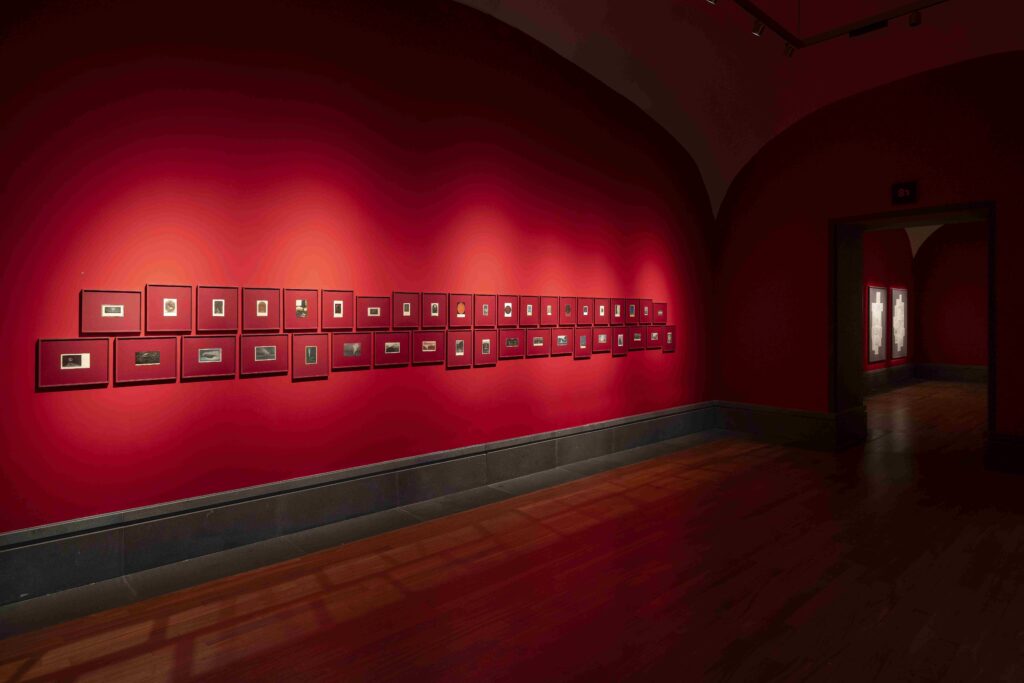
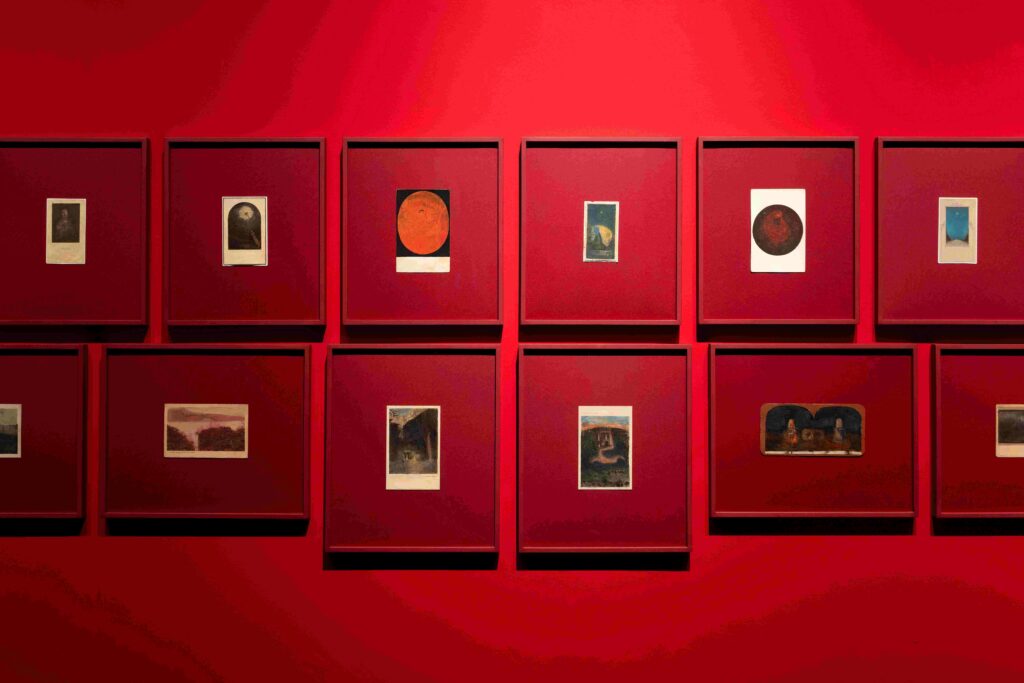
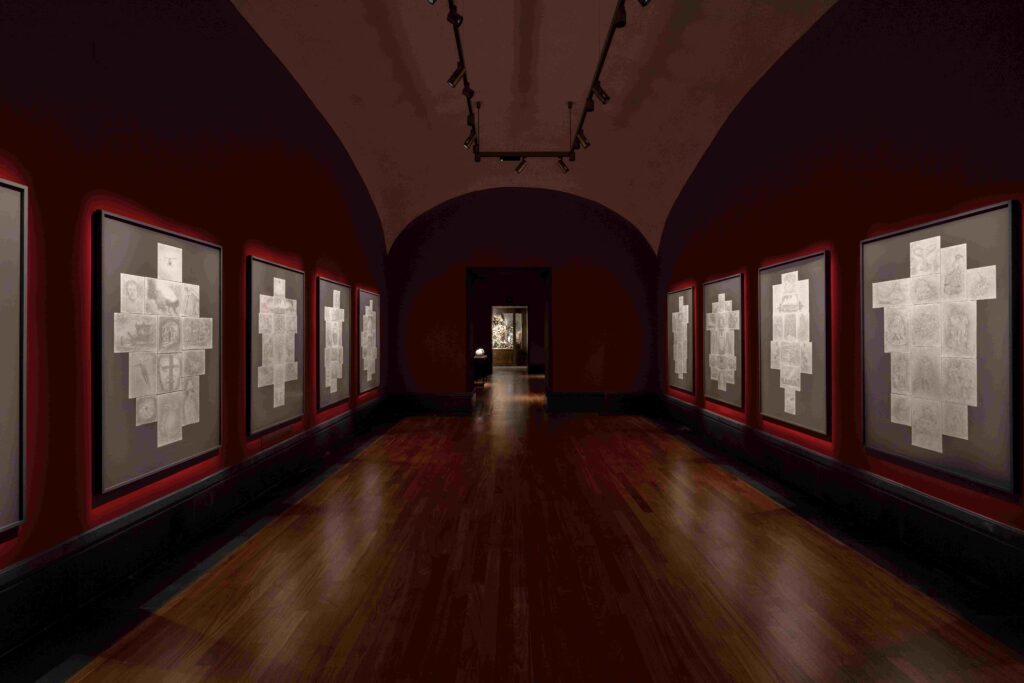
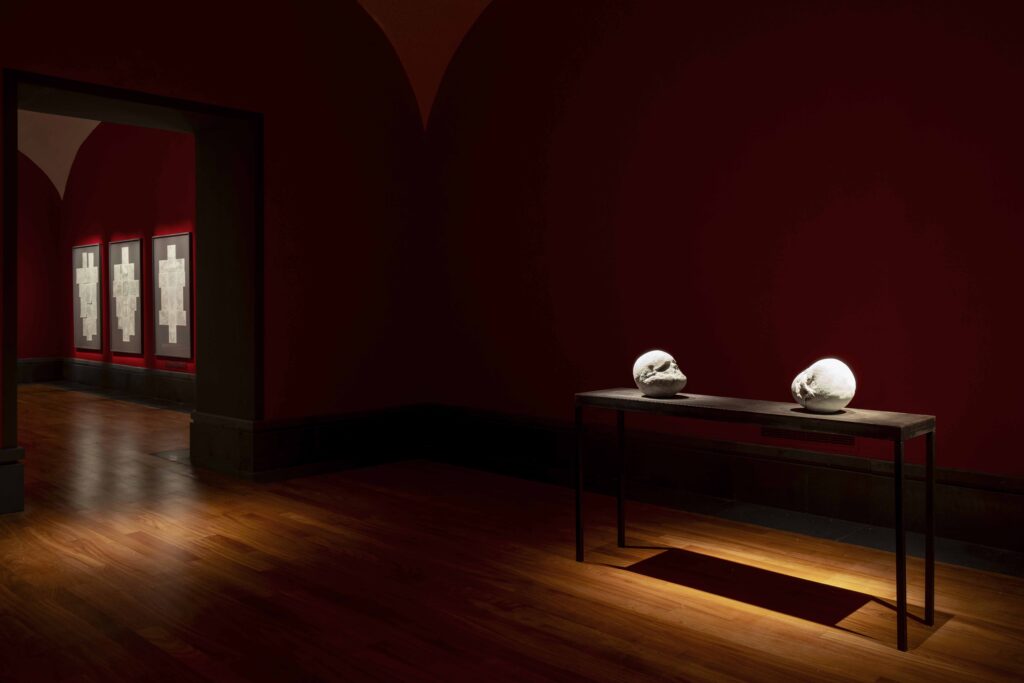
The exhibition occupies the second floor of the Royal Palace (rooms 81, 83 and 84) and unfolds across three distinct yet interconnected spaces. The central gallery, which brings together the drawings from Atlas Partenope, enters into dialogue with the “overpaintings” of holy cards and postcards produced over the past twenty years, as well as with a new installation in unfired clay that, almost like an epitaph, marks the exhibition’s final space.
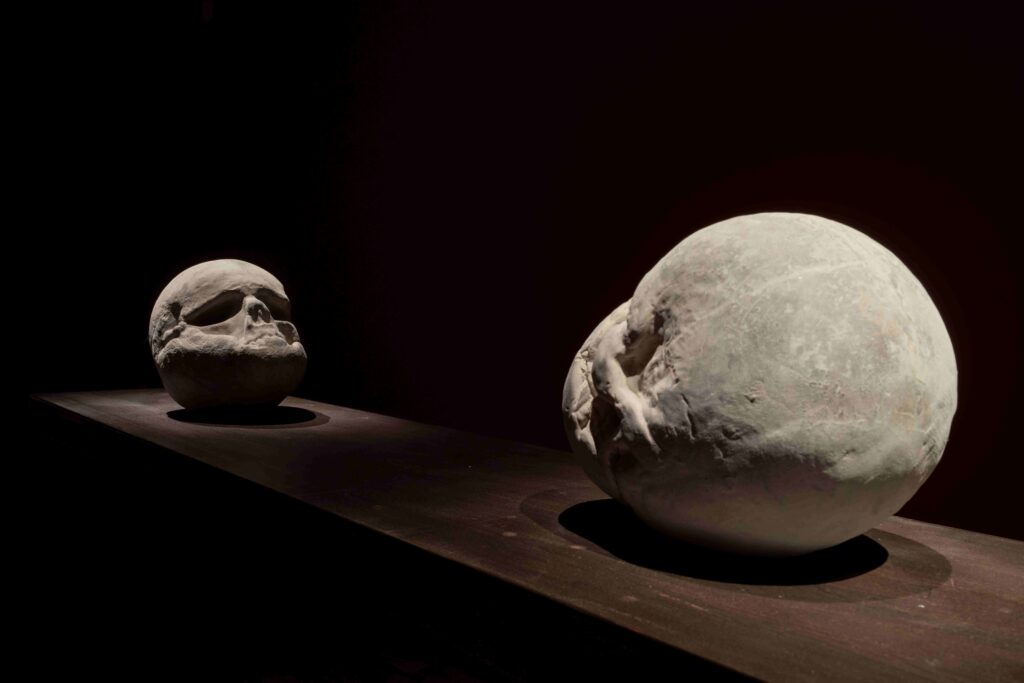
Moving across different artistic media—drawing, painting and sculpture—the thread connecting the three galleries is the transfiguration of pre-existing images belonging to a shared memory: the images found on postcards and holy cards, as well as the Atlas’s diorama of images. This process culminates in the re-emergence of a skull in the final gallery, where a phrase inscribed on the wall—“ashes return to clay”—suggests that the exhibition as a whole might be understood as a kind of life-affirming exorcism, an attempt to restore life to the images deposited in our psyche.
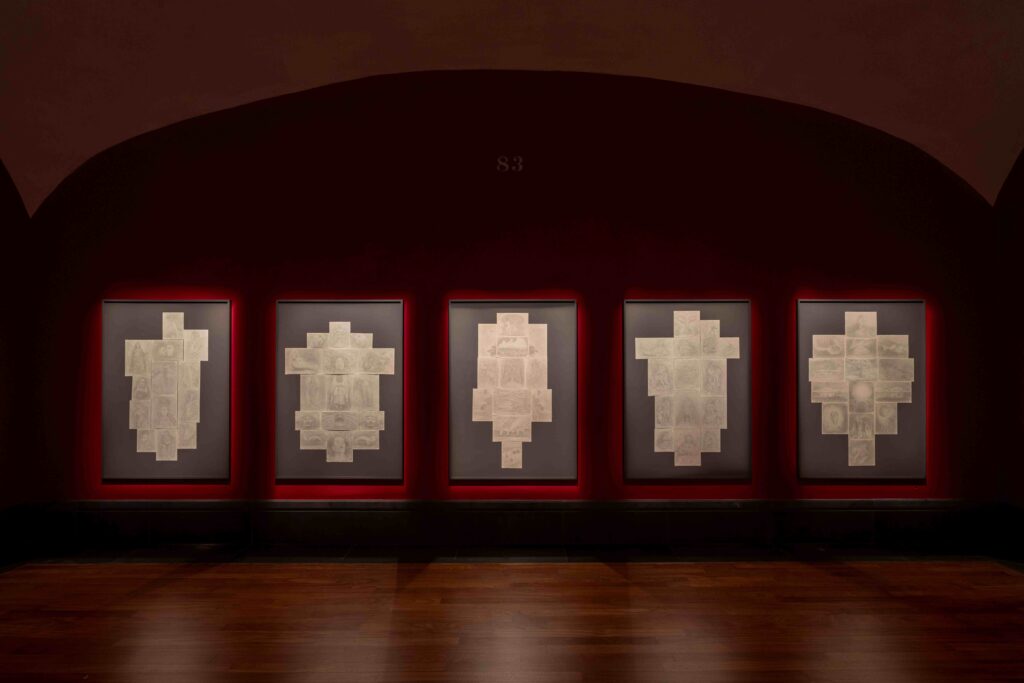
At the heart of the exhibition are the ten polyptychs of Atlas Partenope, installed in the central gallery. This ensemble of ethereal charcoal drawings allows visitors to trace figures appearing in works held at Capodimonte, in other museums and churches across the city, in homes and on the streets, as well as in films and theatrical productions made in Naples.
“An atlas of the ‘images of the heart’,” Fogli calls it, adding: “To erase, deform and luxuriate among ruins is an act that, even when artistic, serves the work of death—which, if we look around us, certainly needs no help from us. Ruins and images, instead, must be inhabited anew and brought back to life.”
This guiding principle, which lies at the origin of the Atlas, finds its final expression in the last gallery, where the words “Ashes return to clay” appear alongside an installation conceived specifically for this exhibition: two spherical capuzzelle—little skulls—created by transforming a clay cast of a human skull.
A similar process unfolds in the first gallery, through the “overpaintings” on holy cards and old postcards that the artist has been painting in tempera for more than thirty years. Gradually erasing and transforming the figures already present, he reconfigures the images into a shifting, metamorphic landscape. It is a landscape—or a figure—glimpsed and rediscovered beyond the mirror, beyond the surface of a conventional image, as though revealed at the end of a Voyage au centre du monde (Journey to the Centre of the World), the title Fogli gave to his series of repainted postcards begun in 2008 and continued to the present day.
“It is no accident but destiny,” Fogli explains, “that the eighth Atlas, the Atlas of Devotions, should have taken shape from the Neapolitan galaxy, with its Greek and Hindu metrics, its Franciscan Christianity and its cosmopolitan spirit.”
He then offers an inventory of images and associations: “Venuses, Madonnas and terrifying Medusas. The serpent and Benino beneath the star of the Nativity. The little shoes of the Annunziata and the skull with ears. The volcano and the sacred wood. The Immaculate Virgin, Mater Matuta and the voices of the Sirens. Pulcinella, the unicorn and the Sphinx. The Neapolitan grotto that breaks death and joins dawn to sunset. The Hermaphrodite, the Femminiello and the priapic Silenus. The rose, the broom flower, the primrose of Palinuro and the sciorilli. The porcelain diorama, where one finds lovers, the flayed Marsyas, the Faun with the boy, and the monkey painting.”
The exhibition opens with a Super 8 film by Neapolitan experimental filmmaker Salvatore Sansone. The film documents an excursion from Cumae to Castel dell’Ovo in the company of the artist, during which the 140 images comprising the Atlas were scattered across a series of emblematic locations throughout the Neapolitan area.
This exhibition marks the artist’s return to Naples, where he previously presented a solo exhibition in 2023 at the Museo Nazionale della Ceramica Duca di Martina, curated by Marta Ragozzino.
The exhibition has been made possible with the support of Studio la Città and Gallerie Riunite.
Photo credits: Amedeo Benestante